Hyderabad Commuters Adapt to KBR Park One-Way Traffic Loop
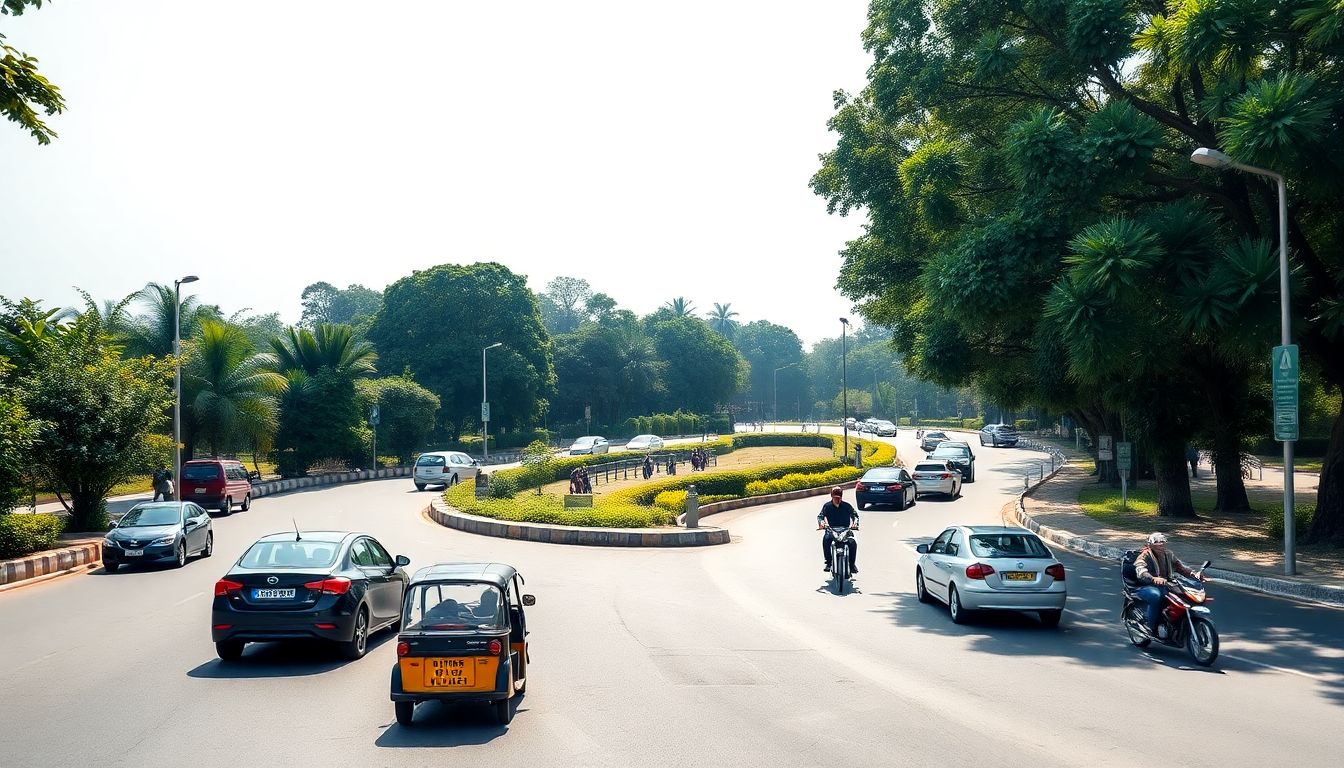
Motorists navigating the Jubilee Hills and Film Nagar areas in Hyderabad are adapting to the one-way traffic loop around KBR Park, which was introduced around 10 days ago. While the detour has added extra driving distance, commuters reported that the system has led to smoother movement, significantly cutting down on traffic snarls and frequent signal stops.
According to several commuters, the longer route has eliminated major pain points such as bumper-to-bumper congestion and arguments arising from traffic bottlenecks. Ride-hailing drivers and motorists noted that travel along the perimeter has become largely stress-free compared to the previous two-way flow.
However, drivers pointed out that some confusion remains regarding lane changes at key junctions. Near the Study Circle by the Indo-American Cancer Hospital, motorists have faced uncertainty over whether to turn toward the hospital or continue along the parallel stretch leading to Maharaja Agrasen Island. Auto driver Srisailam noted that while movement at KBR Junction is smooth, lane selection at the Study Circle remains tricky.
Commuters travelling from Film Nagar and Jubilee Hills toward the Jubilee Hills Check Post metro station have also flagged sudden vehicle movements. Commuter Rameshwara Rao explained that vehicles abruptly shifting course toward Chiranjeevi Blood Bank or KBR Junction create uncertainty on that stretch.
Traffic also tends to slow down during peak evening hours between 7 pm and 10 pm, particularly near the Indo-American Cancer Hospital, Maharaja Agrasen Island, and Film Nagar.
Some local road users suggested that the one-way system should have been prioritised before planning major infrastructure work. Commuter Adi Narayana stated that if traffic continues to move smoothly under the loop system, costly flyovers and underpasses proposed under the GHMC's H-CITI Project might not be necessary.