Telangana Government to Implement Revised Land and Property Values From June 5
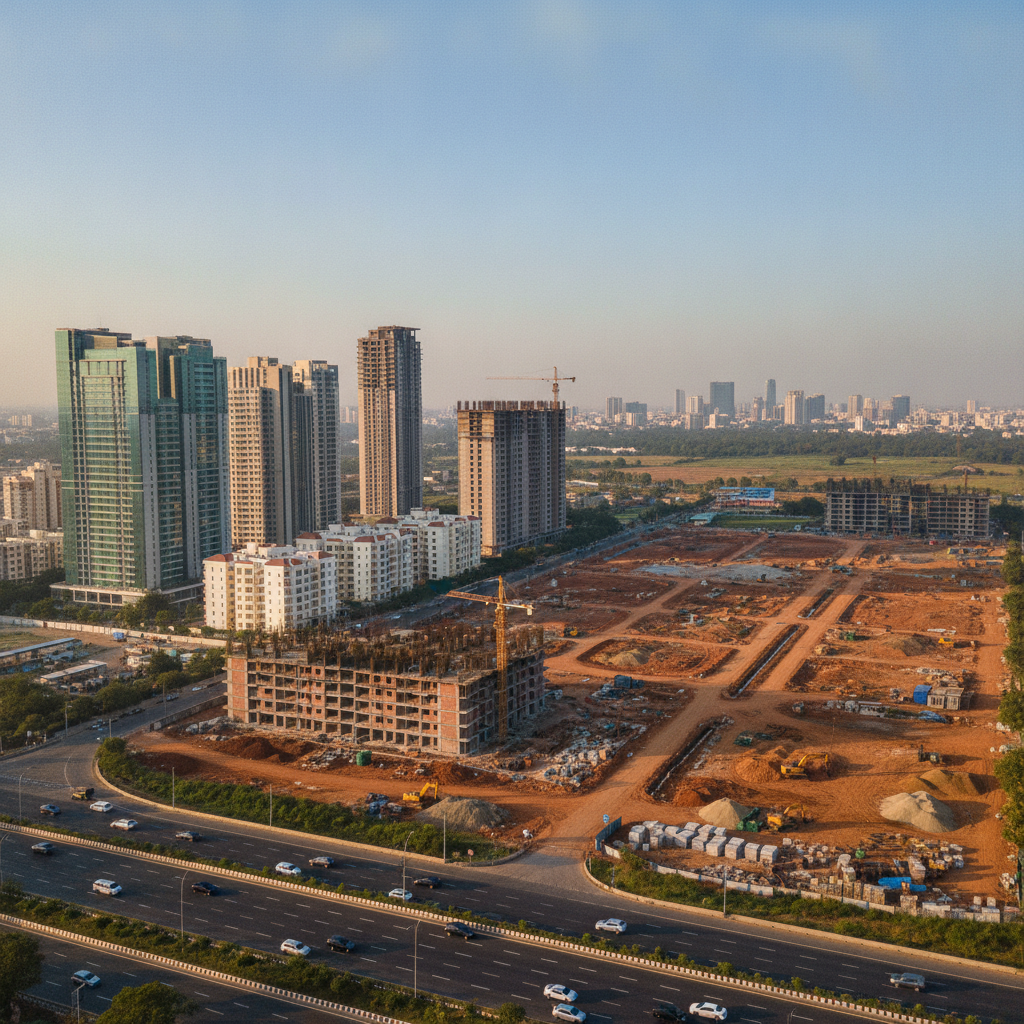
HYDERABAD — The Telangana government announced on June 3, 2026, that revised land and property values will take effect across the state from June 5, 2026. The implementation follows a State Cabinet decision to rationalise property values in areas where government-fixed rates differed significantly from prevailing market prices.
Revenue Minister Ponguleti Srinivasa Reddy stated that the revision was undertaken after an extensive study of regional market conditions, registration trends, open-market rates, and the disparities between actual and government-notified values.
According to the minister, the exercise aims to ensure transparency in property transactions, align government values with market realities, and improve revenue mobilisation while minimising inconvenience to the public.
The revised market values have been updated across all 144 Sub-Registrar Offices (SROs) in Telangana. Separate rural and urban committees assessed local conditions before finalising the new rates.
The government fixed the revised values based on several factors, including development potential, growth corridors, recent land auctions, demand patterns, industrial expansion, and infrastructure projects. The influence of the Outer Ring Road (ORR) and Regional Ring Road (RRR) was also factored into the assessment.
For residential apartments, the government has rationalised values in locations where rates previously varied across different floors despite having similar market conditions. Uniform rates have now been adopted in these areas. However, no rate increases have been proposed for localities where property values are already high.
Additionally, the government has established minimum base values for agricultural lands, plots, and flats. These values are based on the development status of regions under the Hyderabad Metropolitan Development Authority (HMDA), CURE areas, and other parts of the state.
Construction costs for RCC and non-RCC structures have also been revised for the first time since 2021. This revision reflects the rising costs of materials and labour, as well as changes in urban local body jurisdictions following municipal upgrades and mergers.