Students Protest at Hyderabad Collectorate Demanding ₹8,000 Cr Fee Dues, Rollback of GO 9
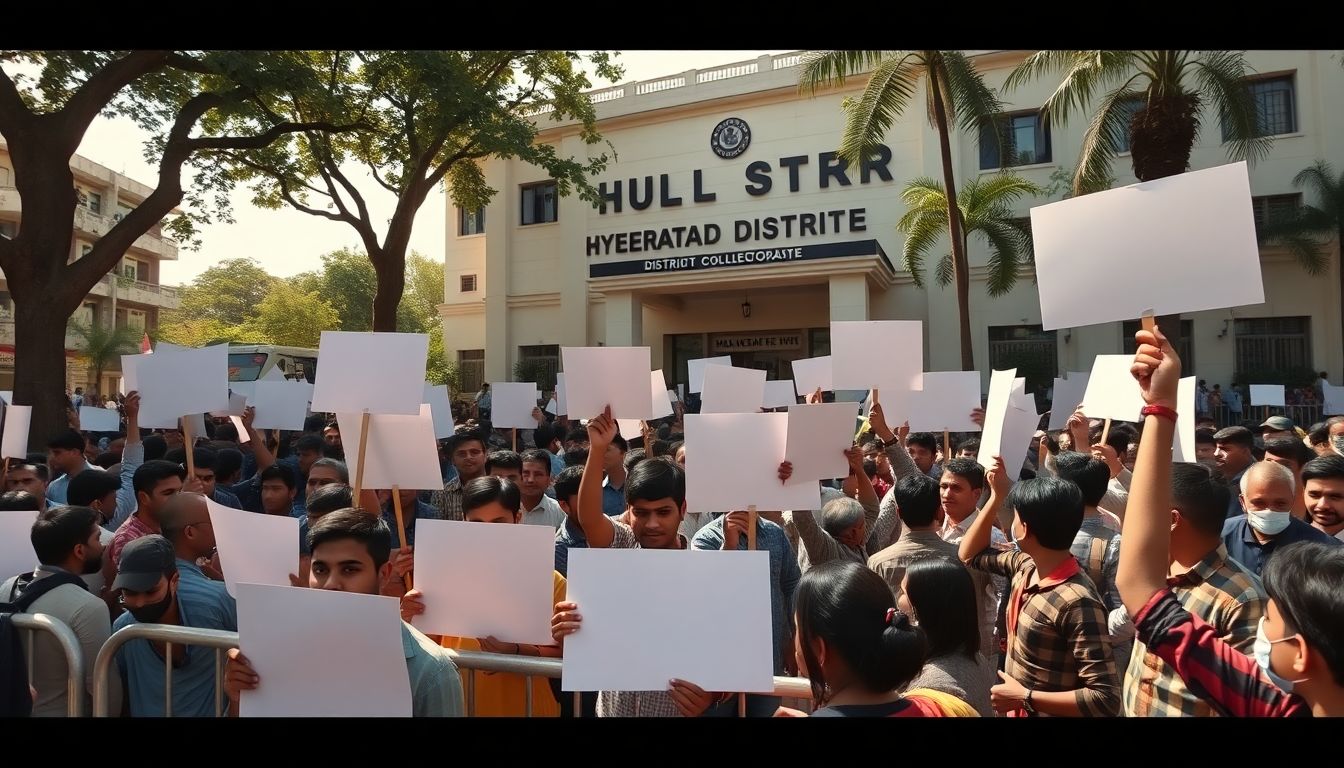
Hundreds of college students and Backward Class community leaders gathered at the Hyderabad collectorate on Thursday to stage a protest demanding the immediate clearance of over ₹8,000 crore in fee reimbursement dues and the withdrawal of Government Order No. 9.
The demonstration was organized by the State BC Student Association under the leadership of its convener, Nikhil Patel. Protesters voiced strong opposition to GO No. 9, which shifted fee reimbursement payments directly to students' bank accounts through direct benefit transfer, alleging that the mechanism has led to harassment of both students and educational institutions.
Rajya Sabha MP and National BC Welfare Association president R. Krishnaiah addressed the protesters and criticized the Congress government's claim of a budget shortfall for student scholarships and fee reimbursements. Krishnaiah questioned why the state government could disburse thousands of crores to contractors while failing to release ₹8,000 crore required to support 14 lakh students.
According to Krishnaiah, the persistent delay in releasing the dues has pushed the state's higher education system into a crisis. He stated that colleges are currently unable to pay salaries to their staff members and that around 200 institutions have already shut down.
The demonstrators also singled out a provision in GO No. 9 that invokes the Revenue Recovery Act. Under this rule, students are required to transfer the received funds to their respective colleges within eight days of the money reaching their bank accounts, facing the threat of jail if they fail to comply.
Describing the measure as "Tughlaq-like" and inhuman, Krishnaiah argued that the Revenue Recovery Act was formulated for loan defaulters and should not be applied to students. He demanded that the government scrap the order and revert to the previous system where fee reimbursement amounts were paid directly to institutions.