IT Minister Launches AI Sewer Governance Platform Project SHUDH In Hyderabad
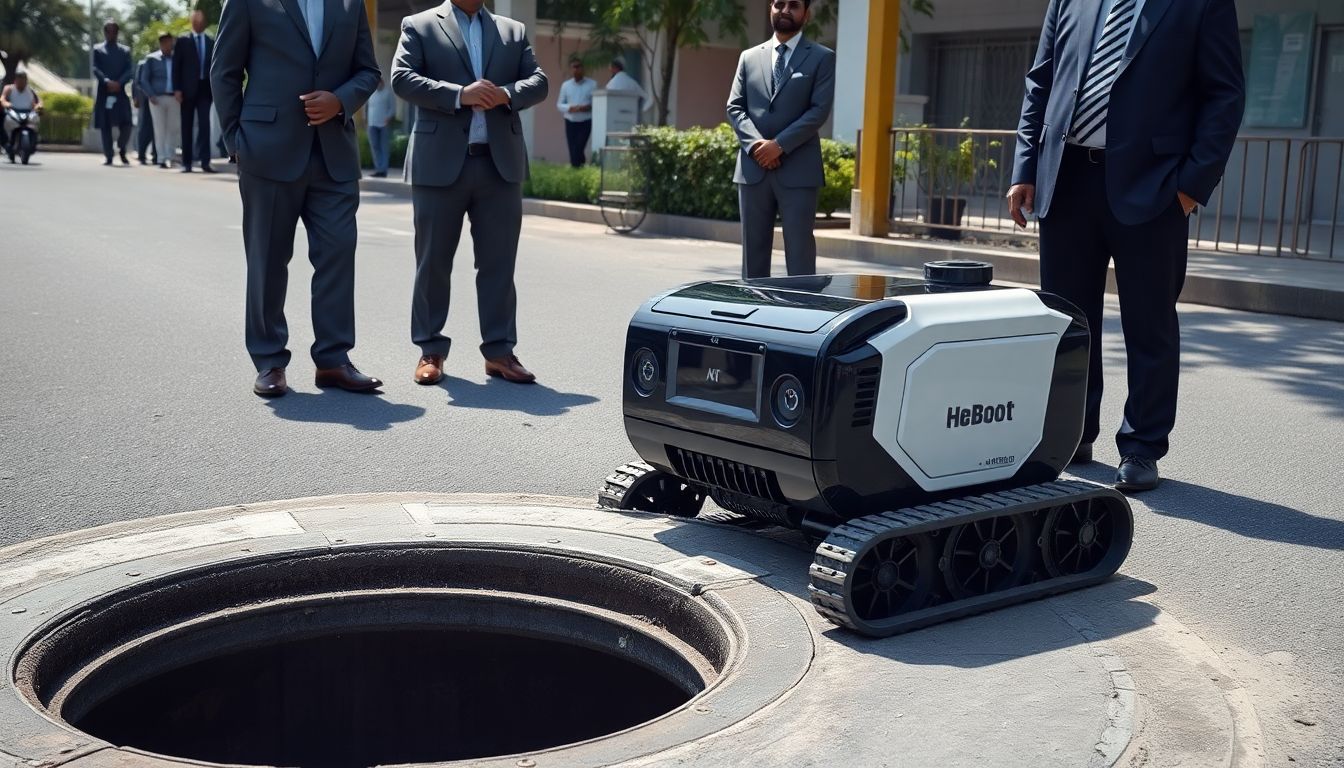
HYDERABAD — Telangana Industries and IT Minister D Sridhar Babu on Saturday formally launched 'Project SHUDH', an artificial intelligence-powered sewer governance platform designed to improve urban drainage management in Hyderabad. The technology was developed by Hyderabad-based deep-tech startup The Bot Factory under the guidance of the All India Robotics Association (AIRA).
The platform is designed to assist key civic agencies, specifically the Hyderabad Metropolitan Water Supply and Sewerage Board (HMWSSB) and the Greater Hyderabad Municipal Corporation (GHMC). By identifying drain blockages, generating automated alerts, and providing critical data for predictive analytics, the system aims to improve overall drainage management and significantly reduce sewer overflow incidents across the city.
Speaking at the launch event, Minister Sridhar Babu described Project SHUDH as a pioneering innovation that demonstrates how advanced technologies can be used to address critical urban challenges. He highlighted that Telangana has emerged as a leading destination for innovation, startups, and emerging technologies. He added that the state government remains fully committed to encouraging young entrepreneurs who are developing solutions with a strong societal impact.
The technology is expected to transition into active field use soon. HMWSSB Managing Director K Ashok Reddy announced that initial trials of the platform have already yielded promising results. Based on these successful trials, the department now plans to initiate a pilot deployment of the platform before scaling it up further across the municipal network based on its ongoing performance.
According to Nihitha, the head of robotics at The Bot Factory, Project SHUDH marks a major shift from manual sewer cleaning to digital sewer governance. By digitally tracking and analysing sewer interventions, the AI-powered robotic platform is designed to enable the smart management of underground infrastructure and ultimately eliminate the need for human entry into sewers and manholes.