Hyderabad residents join monthly walks in Gachibowli to save ancient granite rocks
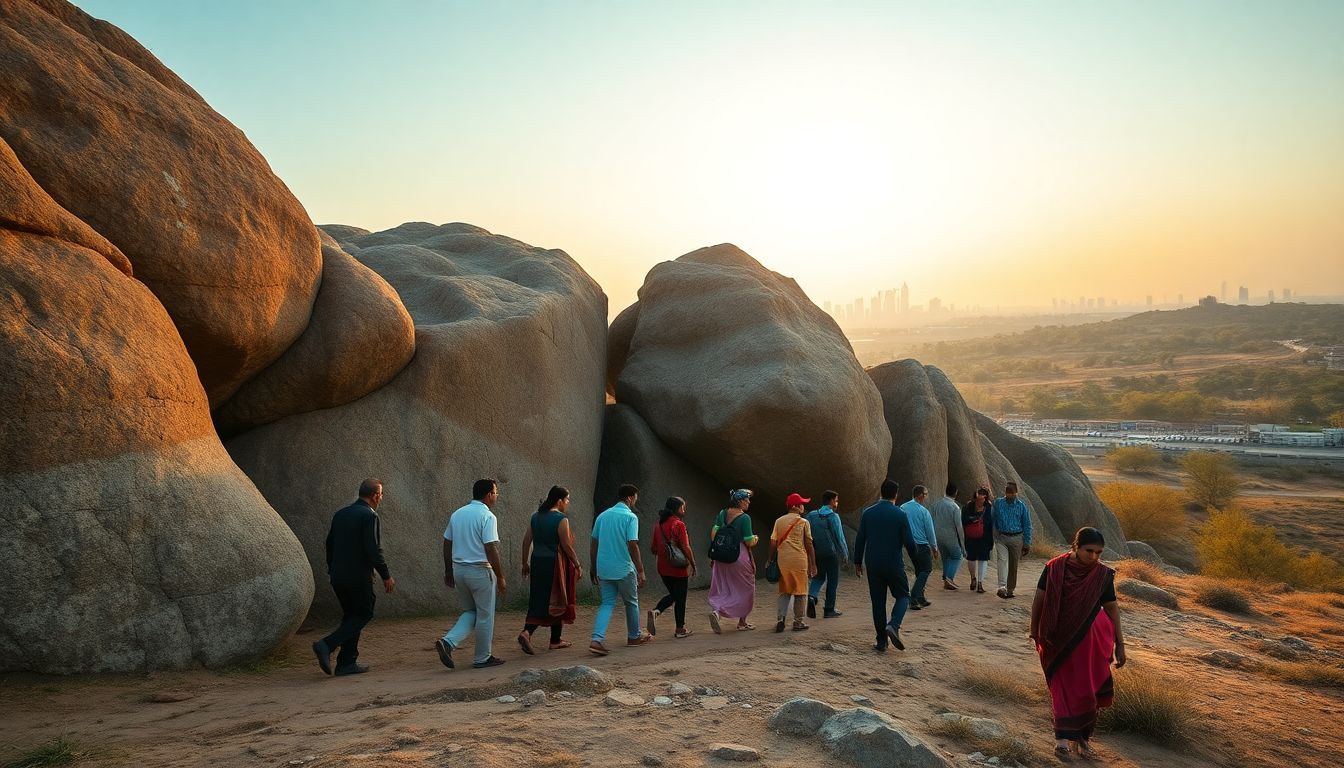
A group of Hyderabad residents, volunteers, and seasoned trekkers are gathering in Gachibowli and other parts of the city on the third Sunday of every month for guided walks aimed at preserving Hyderabad's 2.5-billion-year-old granite rock formations. Organized by the Society to Save Rocks, these monthly "Rock Walks" seek to raise public awareness about the ecological and historical value of these ancient geological structures.
The guided walks rotate locations each month, covering areas such as Gachibowli, Osmania University, Shamirpet, Moula Ali, Pahadishareef, Golconda, Asifnagar, and Sitarambagh. During the outings, which range from half-day trips to overnight programs, participants learn about the geology, ecology, and biodiversity of the rocky landscapes.
According to conservationists, the granite formations are crucial to the local ecosystem. Sangeeta Varma, vice-president of the Society to Save Rocks, explained that these rocky outcrops and hillocks act as natural reservoirs of minerals and help recharge groundwater, which in turn sustains Hyderabad's lakes.
The primary message of the campaign is that unlike trees, which can be replanted, blasted rocks can never be replaced. Vasu Nugala, a life member of the Society and mountaineer who helps coordinate the walks, emphasized that once a rock formation is blasted, it is gone forever. The group advocates for integrating these natural formations into buildings, campuses, and public spaces rather than destroying them for urban expansion.
The Society to Save Rocks was formed in 1996 by concerned residents who witnessed rapid urban development erasing the city's rocky landscape, particularly in Banjara Hills and Jubilee Hills. The group has grown from 26 founding members to approximately 300 members today. Among its early members was Frauke Quader, a German national who moved to Hyderabad in 1975 and serves as the Society's secretary.
Over the years, the Society has worked with government departments to secure legal protection for these geological features. Their efforts led the undivided Andhra Pradesh government to declare nine rock formations as heritage precincts in 1998, with another 16 added later to the Heritage Conservation List. More recently, the Society engaged with HYDRAA to secure the fencing of the Fakhruddingutta site.