Telangana High Court Stays Single Judge Order on Kalyana Lakshmi, Shaadi Mubarak
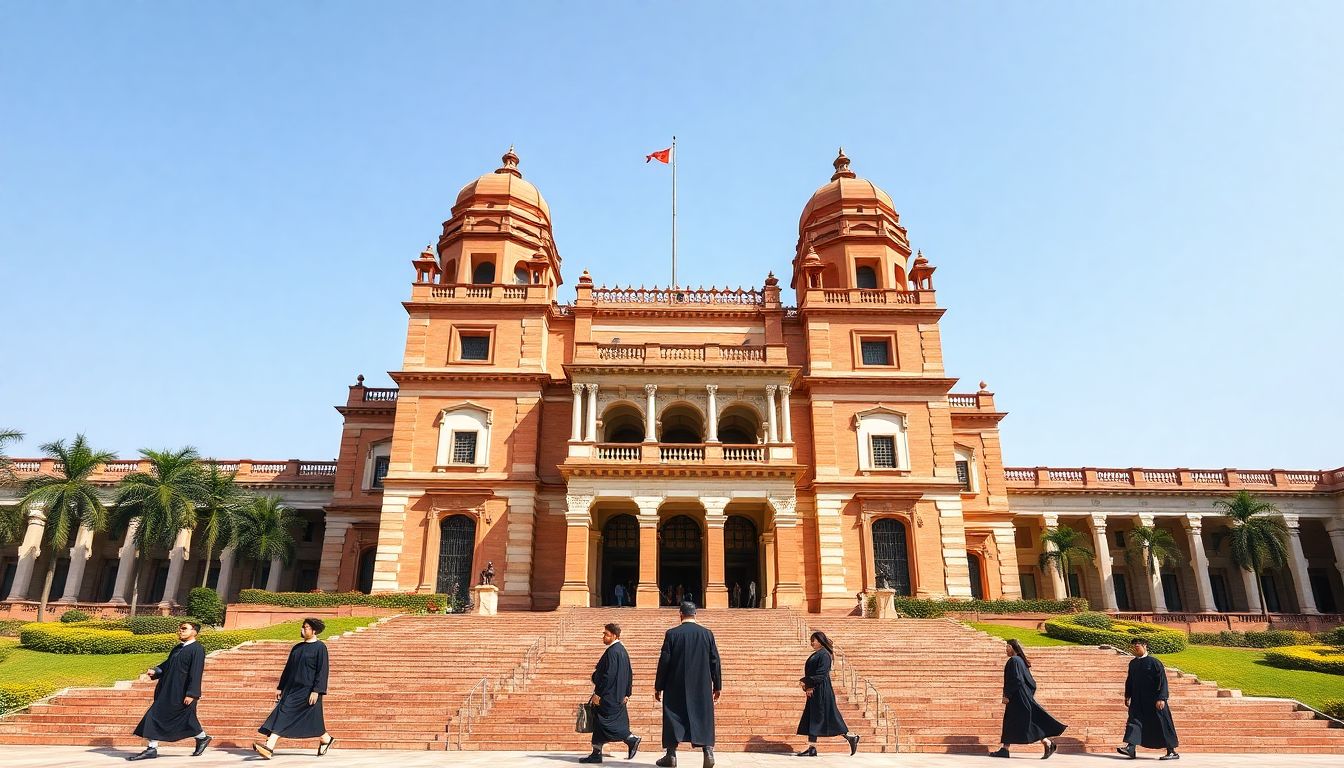
A division bench of the Telangana High Court in Hyderabad on Tuesday allowed the state government to continue implementing the Kalyana Lakshmi and Shaadi Mubarak welfare schemes and disburse financial assistance to eligible families for brides' marriages across all communities.
The bench comprising Chief Justice Aparesh Kumar Singh and Justice G.M. Mohiuddin stayed an interim order issued on August 12 by a single judge bench. The single judge had previously halted the operation of eight government orders (GOs) that governed the implementation of the schemes and the release of funds.
In its decision, the division bench noted that the Comptroller and Auditor-General (CAG) had not specifically indicted the expenditures incurred under the welfare schemes as lacking legislative or constitutional backing. The bench observed this after asking the petitioner, Vijay Gopal, whether the CAG report had made any such indictment, to which the petitioner responded that it had not.
Vijay Gopal had filed the writ petition challenging the validity of the executive orders, arguing that the government could not formulate such an extensive welfare policy, set eligibility criteria, and disburse thousands of crores of public funds through mere government orders without legislative backing. Following the state's initial failure to file a counter, the single judge had granted an interim stay, which was not vacated even after the state subsequently filed its response, prompting the government to appeal before the division bench.
Appearing for the state, Advocate-General A. Sudarshan Reddy argued that the schemes were introduced in 2014 as continuous measures that align with Supreme Court objectives on preventing child marriage. He also questioned the maintainability of the writ petition, arguing that the petitioner had suffered no personal prejudice or rights violations.
The petitioner argued that his challenge targeted executive orders issued without statutory authority under Article 162 rather than any legislation. He noted that financial assistance of Rs 1 lakh and above was being distributed in the name of the bride's mother, sometimes through MLAs, which he contended formed part of a policy framework created without legislative sanction.