Telangana CJ, DGP Urge Reforms at Juvenile Justice Act Consultation
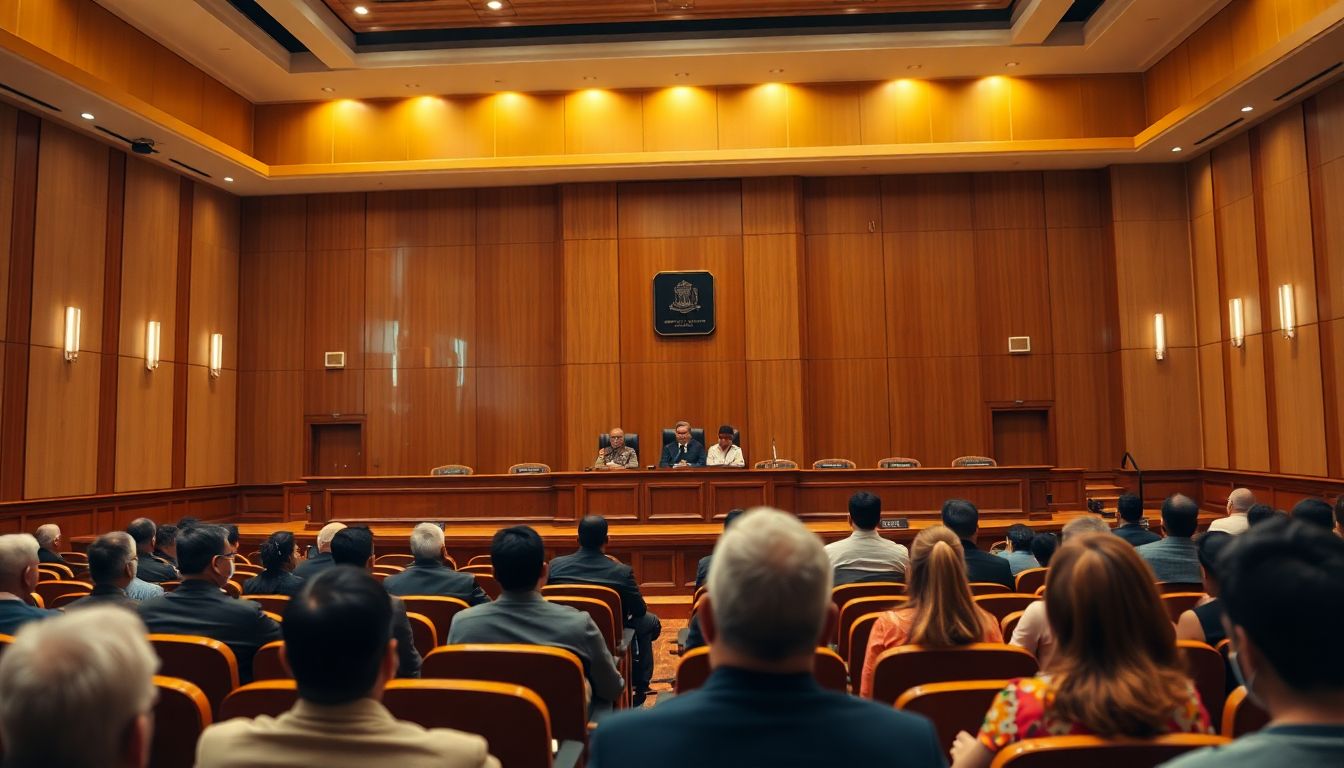
Hyderabad: Telangana High Court Chief Justice Aparesh Kumar Singh called for preparing a social investigation report for every child to detect vulnerabilities before they fall prey to trafficking, exploitation, or delinquency. He made the remarks while addressing the annual state-level stakeholders consultation meet on the Juvenile Justice (Care and Protection of Children) Act, 2015, held in Hyderabad. The conference was organised by the Judicial Academy to mark a decade of the legislation's implementation and deliberate on the path forward.
Chief Justice Singh emphasised that preparing a social investigation report must not become a routine official formality or mere paperwork. Instead, he said the assessment must provide a meaningful understanding of a child’s family circumstances, social environment, vulnerabilities, and needs, enabling authorities to make informed decisions in the best interests of the child. Pointing out that neglected children could drift into delinquency and become hardened offenders, he cited the 2012 Delhi rape incident to underline the danger of failing to address vulnerabilities early.
Also speaking at the consultation, Telangana Director-General of Police C.V. Anand called for a wider debate on whether the legal framework governing the age of juveniles accused of heinous crimes should be revisited, particularly in cases involving grave and calculated violence. Anand cited the recent murder of school principal Roopa Reddy in Nalgonda, allegedly by a juvenile following disciplinary action, noting that such incidents raise difficult questions about when an accused minor should remain in the juvenile system and when the law should hold them accountable as an adult.
Anand urged stakeholders to examine whether the legal definition of heinous offences warrants reconsideration and whether preliminary assessment frameworks should be made more rigorous and uniform. While questioning whether the age threshold itself requires debate, the DGP cautioned that any statutory changes must not dilute the core principle of offering children rehabilitation and reintegration into society. Under the existing Act, minors aged 16 to 18 accused of heinous offences can undergo an assessment by the Juvenile Justice Board to decide if they should be tried as adults.
Justice Moushumi Bhattacharya, High Court senior judge and chairperson of the Telangana Judicial Academy, observed that while the 2015 Act is a strong standalone law, its success depends on statutes like the Pocso Act, 2012, and the BNS, 2023. Sonykutty George, child protection specialist at Unicef, cautioned against unnecessarily moving children aged 16 to 18 out of the juvenile justice system and affirmed Unicef's readiness to support state interventions. High Court judges Justice Surepalli Nanda, Justice E.V. Venugopal, Justice Namavarapu Rajeshwara Rao, Justice Renuka Yara, Justice G.M. Mohiuddin, and Justice Vakiti Ramakrishna Reddy also attended the meet.