Menaka Guruswamy Addresses Youth Protests and Institutional Crises in Hyderabad Lecture
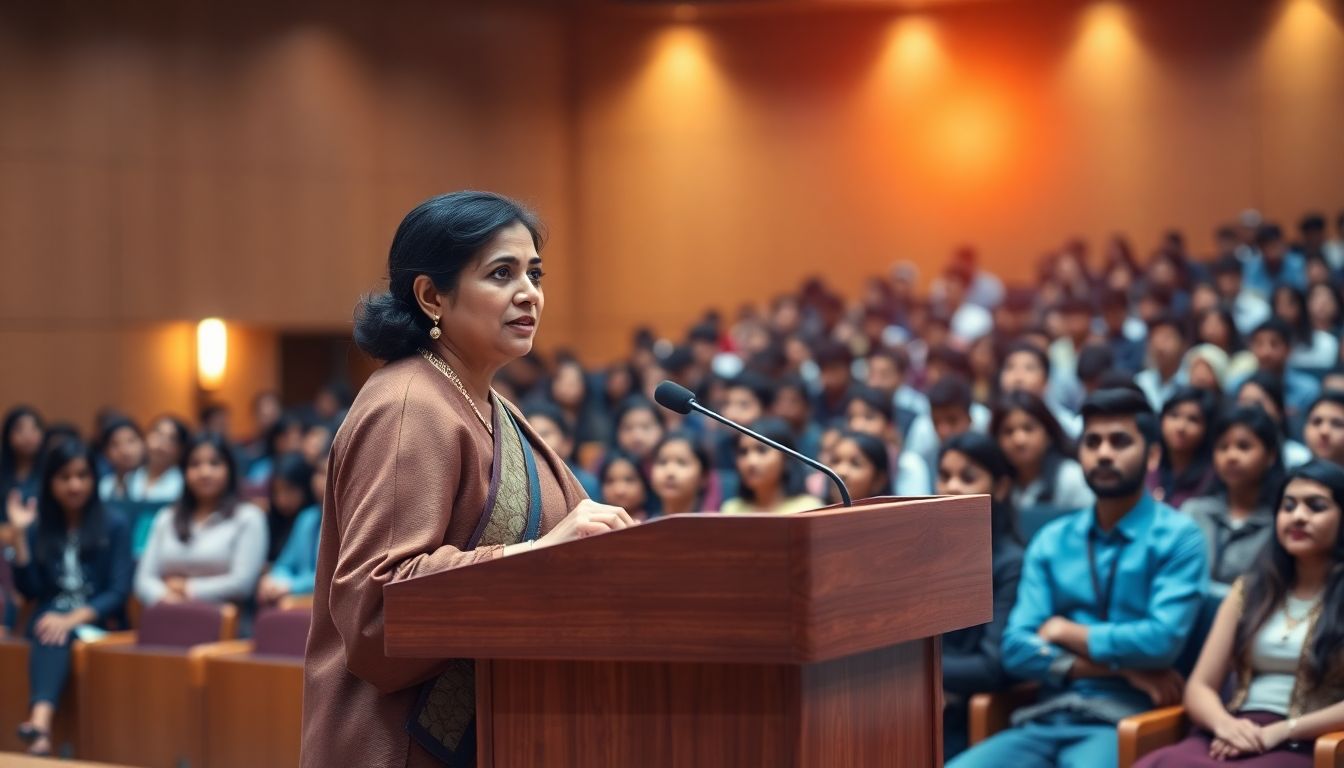
Protests by young Indians over examinations, jobs, and education mark the point where institutional failure becomes visible, Supreme Court senior advocate and Rajya Sabha MP Menaka Guruswamy said in Hyderabad on Saturday.
Delivering a lecture titled 'Indian Constitution and its Protection', organised jointly by the S. Jaipal Reddy Memorial Foundation and the Manthan Foundation, Guruswamy argued that constitutional promises of freedom must translate into opportunity, dignity, and a public voice. She traced the path of youth from classrooms to the labour market and onto the streets when institutions fail.
Guruswamy highlighted the strain on social mobility, pointing to data from the 'State of Working India 2026' report showing graduate unemployment at nearly 40 per cent among individuals aged 15 to 25, and about 20 per cent among those aged 25 to 29. She also criticised official metrics such as the Periodic Labour Force Survey's current weekly status, which counts someone as employed if they worked for at least one hour in the previous seven days, questioning the quality and security of such employment.
The rising cost of private education was another major concern raised during the address. Guruswamy noted that as public educational capacity shrinks, financial burdens shift directly onto family budgets through fees, private coaching, transport, and student loans. For middle-class households, she observed, competitive examinations like NEET represent an avenue for stability, but recent irregularities have eroded trust in the systems deciding their futures.
Guruswamy pointed out that nations such as Germany, South Korea, Japan, and China have created institutional links between education and industry, questioning why individual Indian youths are left to bridge that gap entirely on their own.
Responding to questions regarding the state of constitutional institutions, Guruswamy stated that the Constitution becomes highly endangered when parliamentary traditions of deliberation are suppressed and institutions, including courts, become politicised.
Earlier in the event, Nalsar University of Law Vice Chancellor Prof. Srikrishna Deva Rao described the Constitution as a framework for social transformation aimed at ending hierarchies and oppression. He underscored constitutional supremacy and ongoing public engagement, while also recalling the contribution of poet and activist Kaloji Narayana Rao to Hyderabad's human rights tradition.