Media Experts Discuss Impact of Big Tech on Journalism at Goethe Zentrum
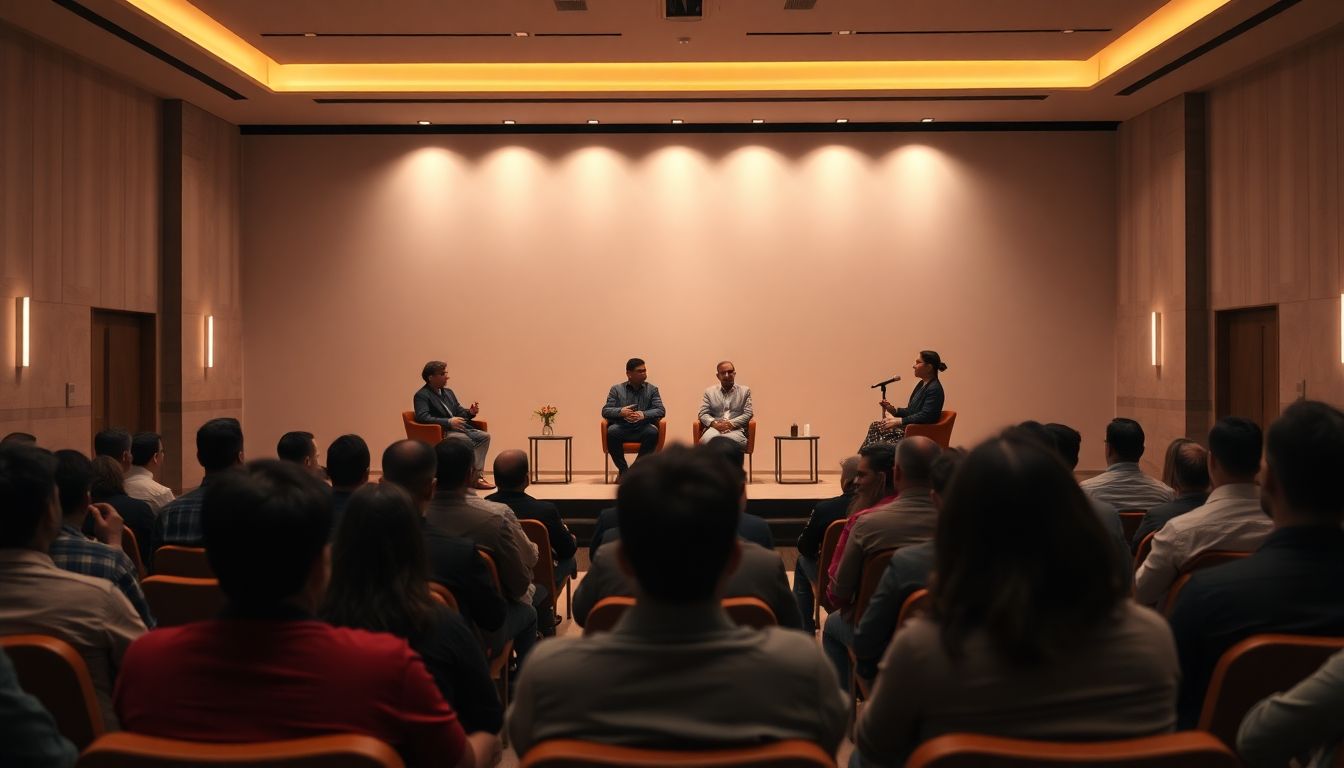
Journalists, researchers, and academics gathered at Goethe Zentrum in Hyderabad on Saturday to discuss how social media and Big Tech are reshaping news production, verification, and digital policy. Speakers emphasised that despite the shift toward shorter formats and algorithm-driven distribution, the core journalistic tenets of credibility and public accountability must remain intact.
The discussion began with a panel titled 'News Gathering in the Age of Big Tech: Safeguarding Truth, Accountability and Justice', featuring Priyanshi Sharma, co-founder of Peek TV, and Naresh Fernandes, Editor of Scroll. The session was moderated by Anjali Lal Gupta, Assistant Professor at the University of Hyderabad.
Speaking on the transition to digital platforms, Ms. Sharma noted that digital journalism cannot simply replicate television broadcasts on platforms like Instagram. She explained that when Peek TV began creating short-form news, it quickly realised that writing, tone, and storytelling had to change. She also pointed out that digital news outlets now face competition from influencers and independent content creators who deliver information with greater immediacy.
Mr. Fernandes remarked that while media distribution technologies have evolved from print to television and digital platforms, the fundamental purpose of journalism remains unchanged. He said the core responsibility continues to be engaging audiences in a public-spirited manner and reporting critical information that might otherwise stay concealed.
A second panel, titled 'Tech Design and Policy: Navigating Algorithm, Surveillance and Ethics', expanded the conversation to broader digital infrastructure issues. The panel included Rakesh Dubbudu, founder of Factly Media and Research, and Aniket Alam, who teaches history and social sciences at IIIT Hyderabad, with moderation by digital culture researcher Usha Raman.
Ms. Raman highlighted that ordinary citizens publishing online also face surveillance and expression curbs, often without the institutional protections available to professional journalists. Mr. Dubbudu noted that India has not seen the same public demand for stricter digital regulation as the United States, partly because digital infrastructure has allowed individuals with limited resources to build independent audiences. Mr. Alam cautioned against viewing the digital landscape solely as a battle between tech corporations and the state, urging a broader view of knowledge production and community.