Khowa Prices Reach Rs 300 per Kg Across Hyderabad Markets
Khowa prices in Hyderabad have surged to around Rs 300 per kilogram in retail markets amid heavy festive demand, with traders in the Old City predicting an additional increase of Rs 10 to Rs 25 per kg in the coming days.
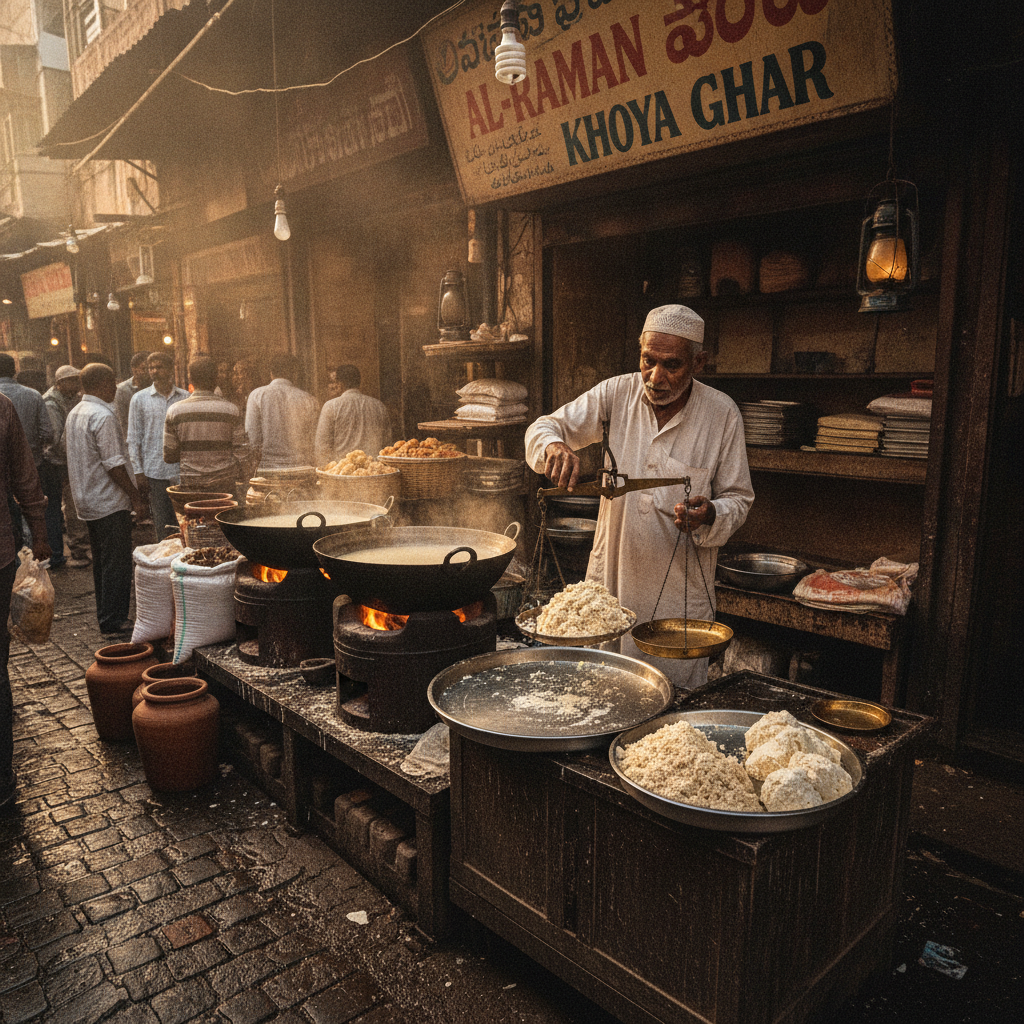
Khowa, also known as khoya or mawa, is prepared by slowly boiling milk in an open pan until it thickens. The product forms the base for a wide variety of traditional sweets, drawing bulk purchases from sweet shops, hotels, and caterers, as well as smaller retail purchases from local households.
"The demand has increased considerably with the festive season. We are already seeing prices touch Rs. 300 a kg in retail, and there could be a further rise if supplies do not keep pace with demand," said Anil Yadav, a khowa trader.
Under normal conditions, four to five tonnes of khowa arrive at the city's wholesale points daily, though supply volumes increase significantly during festival periods. Consignments arrive late at night, transported by jeeps and other vehicles from Solapur and other parts of Maharashtra, where village households prepare khowa before distributing it to larger traders.
The wholesale and retail trade is concentrated around the old khowa market behind Suraj Bhan Hospital at Shahalibanda and the newer market along Hari Bowli Road. Together, the two hubs house close to 100 shops, many of which have been running for decades.
"During festivals and marriages, demand increases sharply and we receive advance orders from sweet shops and caterers," said Mohammed Afzal, a trader operating in the market.
The historic market area is popularly known as Chandulal Bela, named after Maharaja Chandu Lal Malhotra, who served as Prime Minister during the reign of the third Nizam, Sikandar Jah. The trade originally began with six shops established by A Raghunandan, Kishtia, Anjaiah, Parmeya, Aagmaiah, and Gulab Singh.
"Several shops are still run by the second and third generations of traders. The business has changed with time, but demand for good-quality khowa remains strong," said Shivalal, another trader in the market.