Hyderabad Bird Atlas Records 248 Species Following Fourth Survey Season
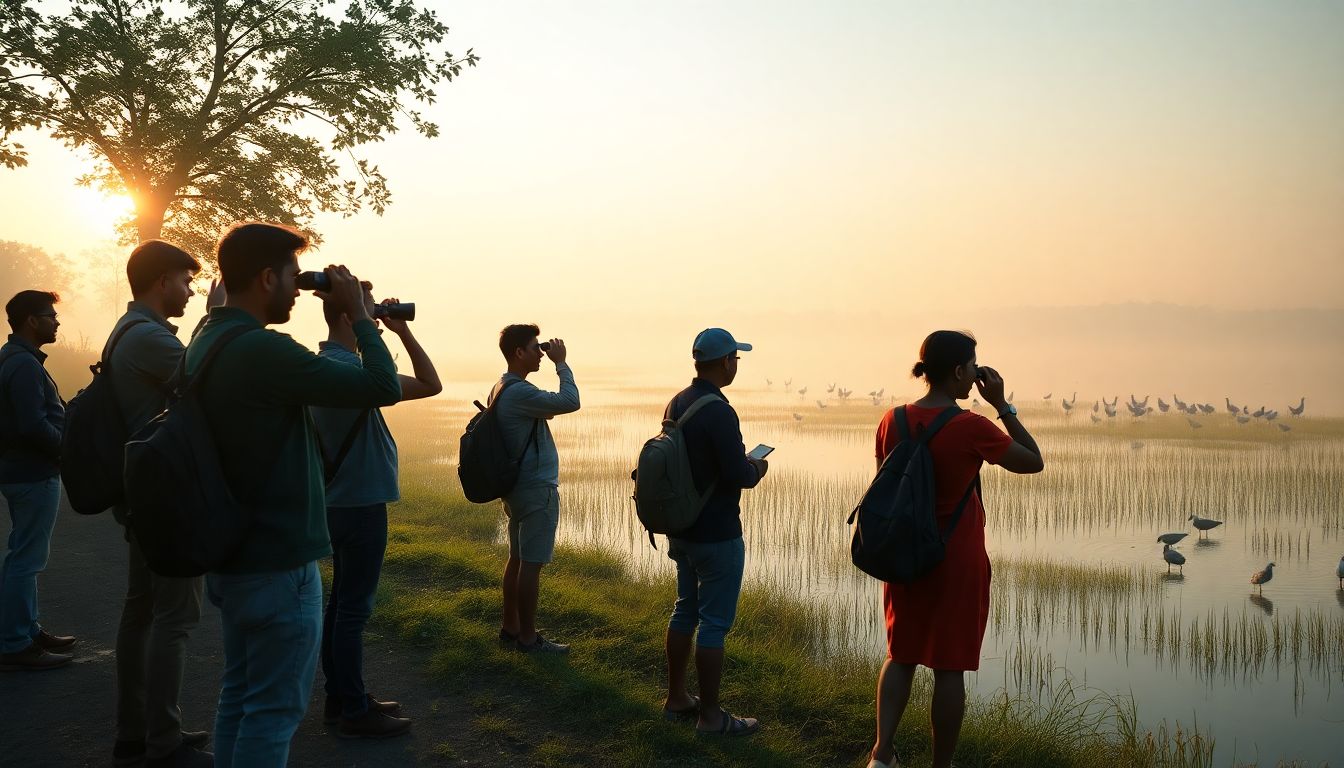
The fourth season of the Hyderabad Bird Atlas initiative concluded following a 22-day survey that began on July 4, bringing the cumulative total of documented bird species in the city to 248. The citizen science effort surveyed avian populations across multiple spots in Hyderabad, including Jalpally, Balapur, Injapur Lake, and the local Race Course.
The initiative is driven collectively by the World Wildlife Fund for Nature-India (WWF), Hyderabad Birding Pals (HBP), and Deccan Birders (DB). During this fourth survey cycle, three new species were officially added to the atlas list: the Greater Flamingo, the Yellow-footed Green-Pigeon, and the Brown-capped Pygmy Woodpecker.
More than 200 volunteers participated in the survey, contributing over 1,250 volunteer hours across the state capital. This marked a 44 per cent increase in volunteer time compared to the third survey season. Over the course of the 22 days, participants logged observations of more than 75,000 individual birds and identified 158 distinct species.
Sriram Reddy, a core member of the Hyderabad Bird Atlas, explained that while the 158 species recorded in this season were slightly below the 166 species documented during the Monsoon 2025 season, all logged observations are currently undergoing review by the project's data reviewing team, which may slightly alter the final tally.
Among the specific sightings logged across the city during the project were the Indian Golden Oriole at the Race Course, Baya Weavers and the Tricolored Munia at Jalpally, the Jacobin Cuckoo in Balapur, and the Blue-faced Malkoha near Injapur Lake.
Reddy stated that the project continues to build a valuable repository of scientific information regarding bird distribution and seasonal migration patterns in and around the urban landscape. This data is intended to support urban biodiversity planning and regional conservation strategies.
The Hyderabad Bird Atlas project was initially launched in February 2025, operating on a twice-yearly schedule with surveys held every February and July. The fifth and sixth survey seasons are scheduled to take place in February 2027 and July 2027, completing the third year of the initiative.