Hyderabad artisan Barad Sunitha sustains 40-year legacy of handcrafted rakhis
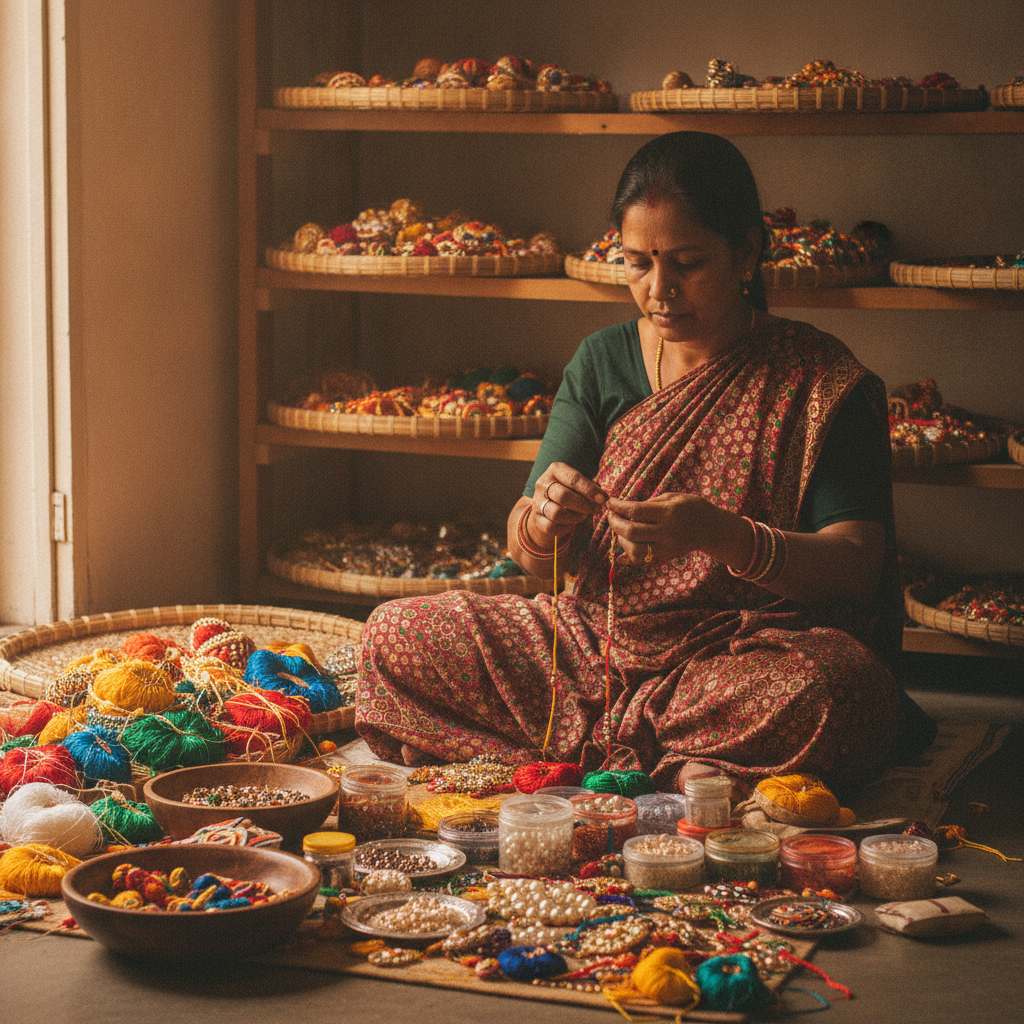
In Hyderabad, artisan Barad Sunitha, popularly known as Rakhi Sunitha, is preserving a four-decade family legacy by producing traditional handcrafted rakhis for wholesale markets across India. Sunitha took over the enterprise seven years ago following the death of her mother, Chandrakala, who initially established the rakhi-making work 40 years ago.
Operating from Hyderabad, Sunitha supplies traditional varieties to wholesale markets that distribute the products to villages and districts nationwide. Her catalogue includes doodhi rakhi, buman rakhi, chamki rakhi, and small-size batana rakhi. In the Kardona category, she manufactures three to four varieties featuring arrangements of 3, 25, 50, and 100 moti (beads).
To make the traditional designs, raw materials are sourced from various parts of the country. Sunitha procures wool from Ahmedabad, cheri from Delhi, beads from Mumbai, and rui (cotton) from Narayanpet, while the thread is acquired locally in Hyderabad. The rui is purchased in bulk, dyed, and dried before being processed for assembly.
The rakhi-making process requires several structured stages. Sunitha counts bundles of 100 threads, cuts them, soaks them in water, applies colour, and dries them before distributing them to craftspeople. For Kardona varieties, beads from Mumbai are incorporated into the 100-thread counts before being passed to karigars for final assembly and sized accordingly.
A decentralised network of artisans forms the core of her production. Sunitha currently works with about 60 artisans who collect raw materials and complete the rakhi assembly based on their availability. While her network previously numbered roughly 100 workers, the current team manufactures about 100 packets per day, with each packet containing approximately 300 rakhis.
Sunitha manages the enterprise independently year-round without government financial support, overseeing production, packing, and distribution to retail stores. Although she remains open to experimenting with modern designs, constraints in manpower have led her to focus on sustaining traditional handcrafted varieties.