Four Artists Explore Monsoon and Memory in 'Mausam' Exhibition at Banjara Hills
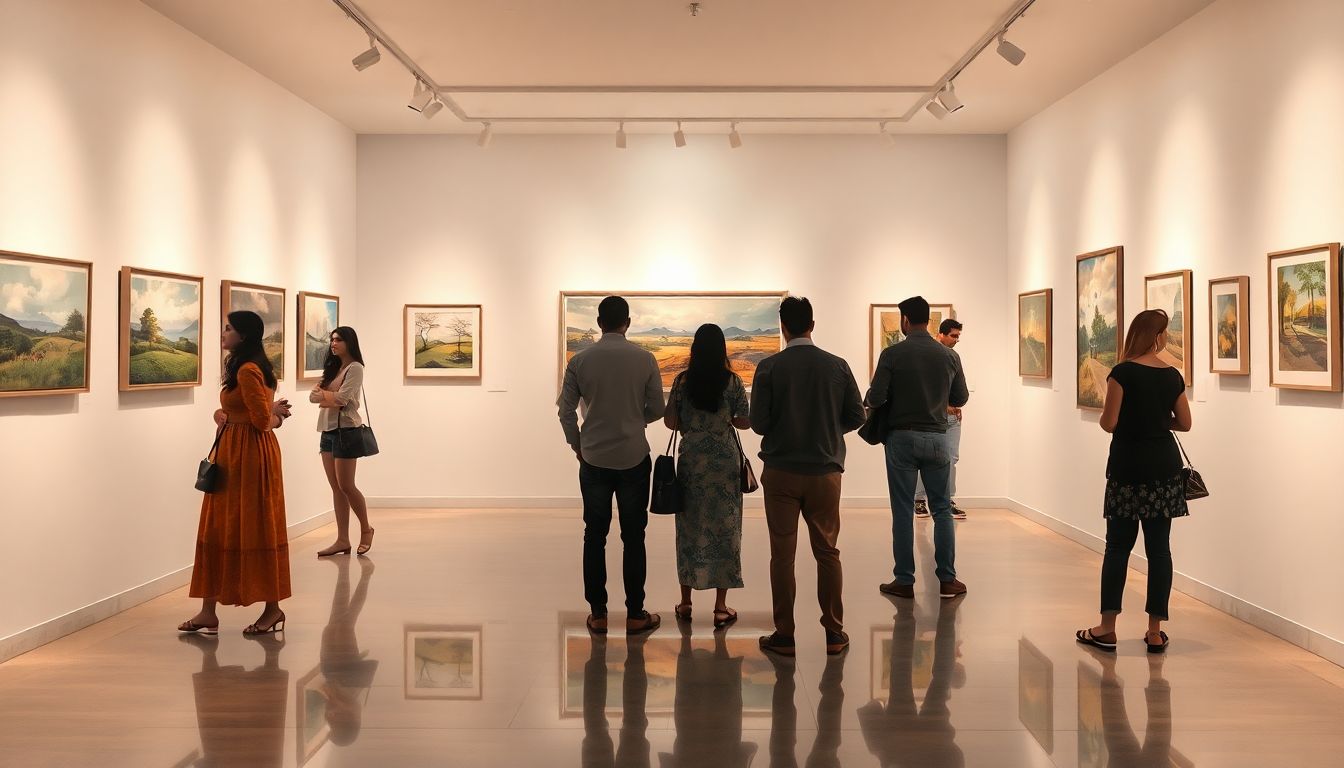
Maison D’Art at Banjara Hills is hosting an art exhibition titled 'Mausam', bringing together works by four artists who explore the monsoon through themes of memory, nature, identity, landscape, and emotion. Curated by Pooja Mallepula, the exhibition features works by Ejum Riba, Monika Singh, Sayuri Bhanap, and Vijay Kethavath, and is on view until September 13.
The show began with the concept of the season before developing into a broader thematic study. According to Mallepula, the exhibition reflects emotional states ranging from love and anger to depression, serving as a medium to examine personal and collective identity.
Artist Ejum Riba draws inspiration from community history in Arunachal Pradesh. Riba incorporates unconventional materials, including OMR sheets, pages from students’ notebooks, stamps, stencils, and silver foils, to examine pedagogical systems and raise questions regarding ethnic erasure among young minds.
Vijay Kethavath presents works centered on farming lifestyles, landscapes, and printmaking. Drawing layouts from memory, Kethavath depicts connections between agrarian communities and local ecology, including generational knowledge such as the emergence of red velvet insects before rainfall. Kethavath created the paper canvas using fibre gathered from farmlands, reprocessed over approximately 15 days, and completed the pieces using colour pencils, ink, and pen.
Monika Singh’s contributions stem from observations made during morning walks near Peacock Lake on the University of Hyderabad campus. Through drawings utilizing charcoal, gateway sheets, and tracing paper, Singh examines the flight of birds, repetition, movement, solitude, and nostalgia across layered surfaces.
Sayuri Bhanap, currently pursuing a master’s degree at the University of Hyderabad, shifted from painting to sustainable textile art using reused and repurposed fabrics. Bhanap’s hand-stitched works contrast the natural wilderness of the campus environment with urban pollution and metropolitan consumerism, applying a colour palette guided by intuition and natural landscapes.