Cyclone Murasu Rain Threatens Standing Crops in Khammam and Other Districts
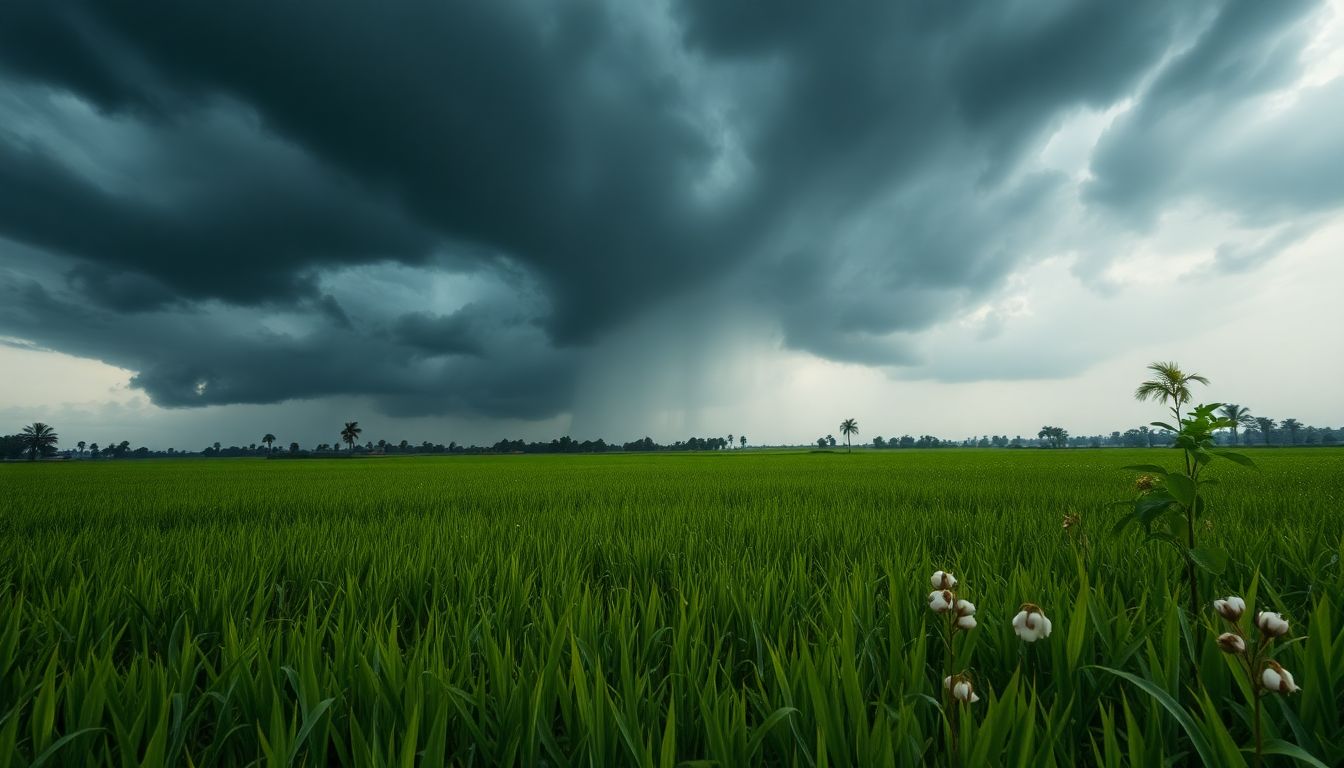
Paddy and cotton growers in Lalapuram village of Konijerla mandal in Khammam, alongside farmers across Telangana, are facing acute distress following a rain forecast triggered by cyclonic storm Murasu. The heavy rainfall predicted from Monday to Wednesday (November 2 to 4) poses a serious threat to standing crops that are currently in various stages of cultivation, ranging from pre-flowering and panicle formation to nearing harvest.
Khammam is among six districts forecast to experience heavy to very heavy rainfall on Monday. The other five districts facing severe weather conditions are Mahabubnagar, Nalgonda, Suryapet, Nagarkurnool, and Wanaparthy. Standing crops in these regions face physical damage, waterlogging, and quality deterioration if fields are inundated.
Sankranthi Narasiah, a paddy farmer from Lalapuram village, noted that fields in his area are currently spanning the pre-flowering to panicle formation phases. He warned that strong winds and heavy rainfall during this vulnerable period would cause substantial financial losses. In Mahabubnagar, Muralidhar Reddy from Balanagar similarly expressed concern, stating that unseasonal rain on standing crops would inevitably lead to destruction.
The storm threat comes at a time when farmers have been securing relatively high market prices for their harvest, earning between ₹3,500 and ₹4,500 per quintal of fresh paddy produce. This stands well above the previous rate of approximately ₹2,900 per quintal, which accounted for the minimum support price alongside a ₹500 bonus for fine rice. With heightened demand, private buyers have been purchasing produce straight from farm gates, resulting in less paddy arriving at state procurement centres.
Growers also face elevated operational expenses if fields become flooded. Donthu Rambabu, joint secretary of the Telangana Rythu Sangham, explained that hiring paddy harvesting machinery normally costs between ₹2,500 and ₹3,000 per hour. When crops get soaked and panicles drop into stagnant water, harvesters require two hours instead of one to clear an acre, doubling machinery costs. Additional labour must also be engaged to divert water from fields, while soaked grains lose weight during drying and fetch lower prices if discoloured, according to Sangham vice-president M. Sudhakar Reddy.
In response to the impending weather system, the Agriculture Department has issued an alert to farming communities and instructed officials to supply protective resources, including tarpaulin sheets to shield harvested grains. Mahabubnagar District Marketing Officer G. Balamani confirmed that several farmers have begun spreading their harvested grains on tarpaulins rather than pouring them directly onto roads for drying.