Anjaiah Nagar Building Collapse Prompts Demands for Action on Illegal Constructions
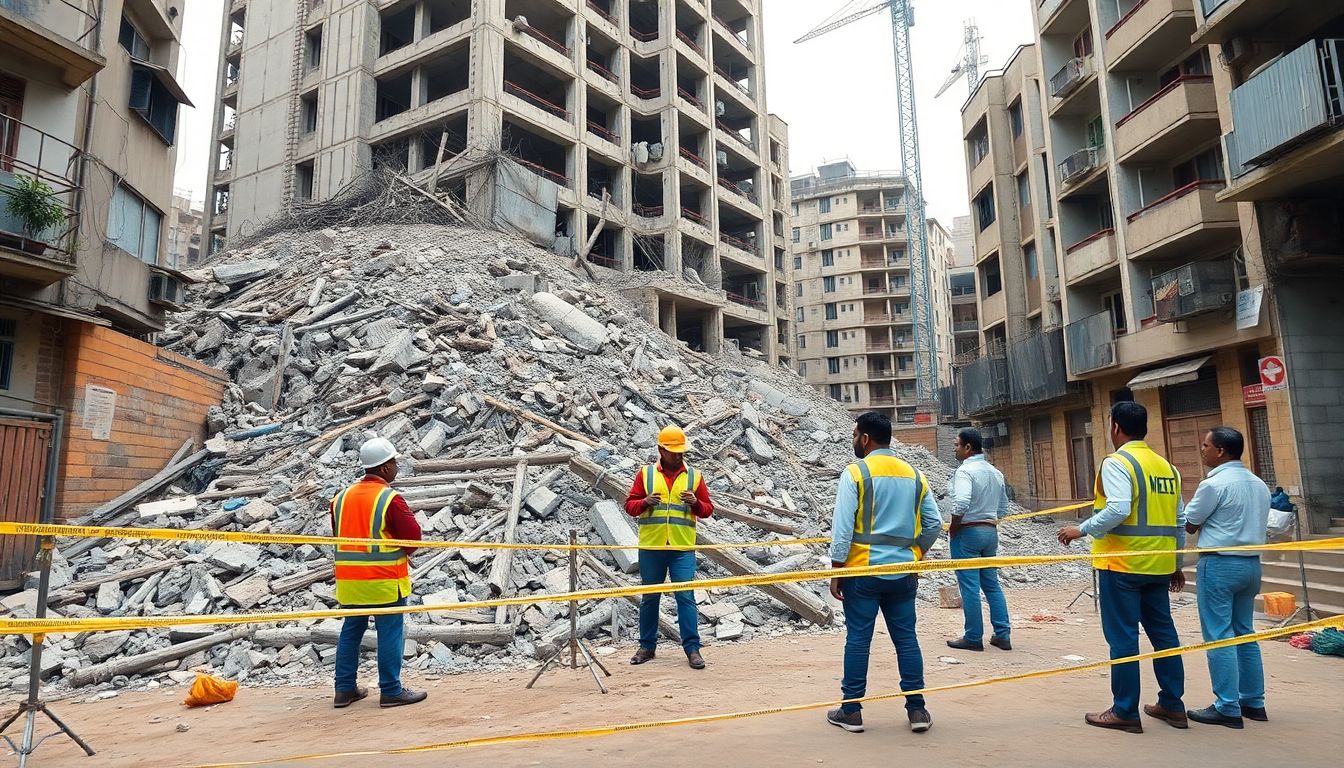
The collapse of an illegally constructed seven-storeyed building on a 48-square-yard plot in Anjaiah Nagar, which claimed the lives of two workers, has put Hyderabad’s civic oversight and rampant building violations under intense scrutiny.
Resident welfare associations (RWAs) and public policy experts have raised serious concerns over the continuing apathy of civic bodies toward unchecked deviations. They are demanding stricter enforcement, greater accountability, and heavier penalties to prevent unauthorised constructions and protect public safety across Hyderabad and its surrounding areas.
Reacting to the Anjaiah Nagar tragedy, RWA representatives stated that merely suspending municipal officials is inadequate. One representative stressed that action against complicit officials must hit harder than a bulldozer hitting brick. Community members pointed out that in the absence of tough enforcement, builders willfully violate norms by adding unauthorised extra floors, flouting zero-setback rules, and running commercial operations in residential zones.
According to municipal guidelines, town planning officials are responsible for inspecting high-rise structures once clearance is granted to verify compliance with building by-laws. However, actual inspections cover only up to 5 per cent of projects, creating an environment where illegal structures proliferate without timely intervention or monitoring.
Public grievance mechanisms, including the Prajavani platform and the CURE App, are regularly flooded with complaints regarding illegal and unauthorised structures. Despite this influx, higher authorities often respond to only a fraction of grievances instead of initiating a comprehensive overhaul of town planning wings. A retired GHMC engineer noted that scores of complaints, grievance petitions, RTI applications, and joint representations frequently go unaddressed while illegal buildings continue to appear.
Experts and former officials have pointed to corruption within civic bodies as a major driver of the crisis. A retired senior bureaucrat who served in united Andhra Pradesh and Telangana stated that the issue represents a congenital defect in municipal governance requiring decisive, surgical reform. RWA office-bearers added that the tragedy highlighted clear dereliction of duty across municipal corporations, calling for swift penalties against officials who ignore violations due to rampant bribery.