UoH and IIT Hyderabad Researchers Secure Patent for Nanosheet Fabrication
Researchers from the University of Hyderabad (UoH) and the Indian Institute of Technology-Hyderabad (IIT-H) have secured a patent for a novel method to fabricate thin transition metal dichalcogenide (TMDC) nanosheets. The patent, which was announced on June 30, 2026, recognizes a major advancement in nanotechnology developed jointly by the two premier Hyderabad-based institutions.
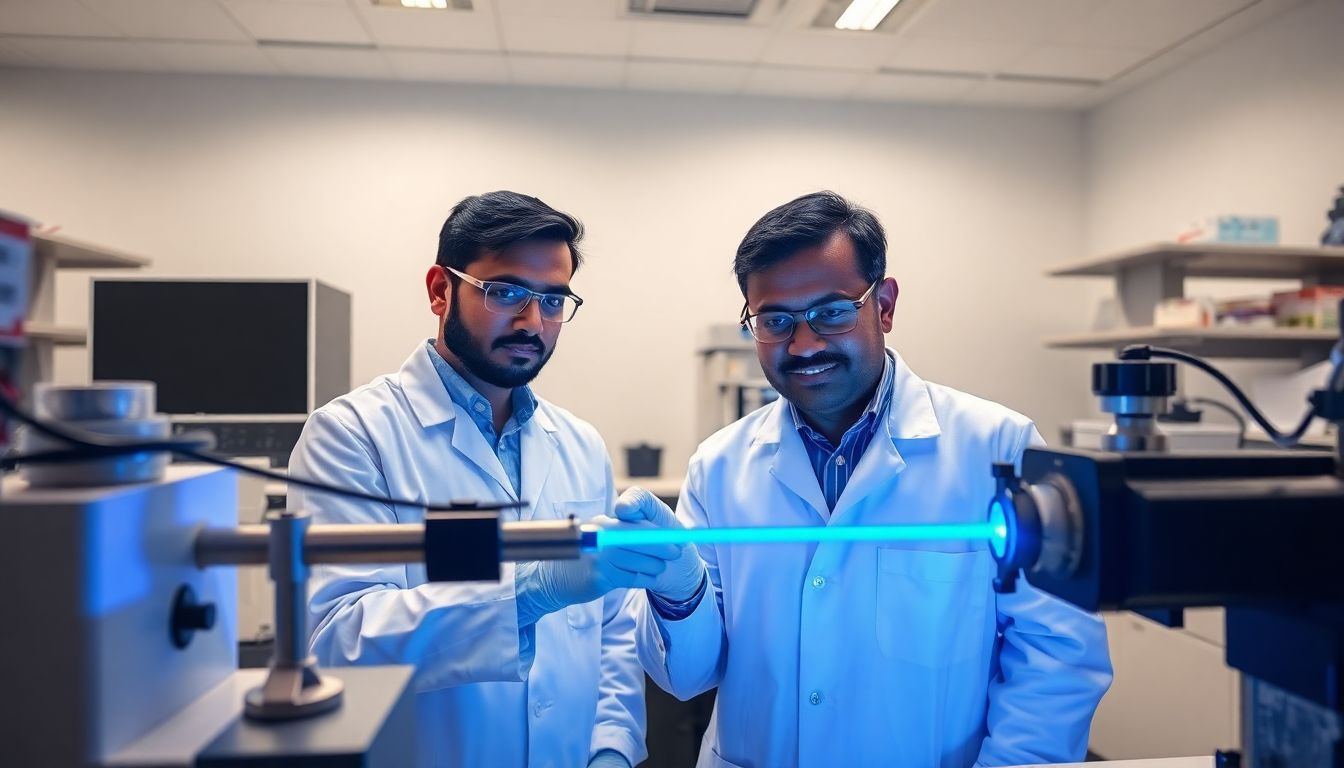
The patented technology utilizes a specialized technique known as Bessel beam femtosecond laser ablation. According to an official release from UoH, this new method offers a rapid, cost-effective, and highly scalable alternative to the conventional fabrication techniques currently used in the field.
The innovation was developed by a collaborative team of local scientists. The research group includes Sai Santosh Kumar Raavi, Challa Rajendra Kumar, and Moram Sree Satya Bharati from IIT-H, who partnered with Soma Venugopal Rao, a senior professor at UoH’s School of Physics, to design the process.
TMDCs are two-dimensional materials that are highly valued for their potential applications in next-generation electronics, optoelectronics, and photonics. Despite their usefulness, existing methods to isolate ultra-thin TMDC layers have faced significant hurdles, as they are often slow, expensive, or difficult to scale for commercial production.
The new approach addresses these challenges directly. By using a specially shaped femtosecond laser beam, the researchers can precisely separate TMDC layers. The process works by breaking weak van der Waals forces—which are short-range intermolecular attractions—without altering the underlying chemical structure of the material.
According to the UoH release, this precise laser ablation process enables the instant production of pristine single-layer and few-layer nanosheets. This breakthrough provides a practical and scalable solution for manufacturing the high-quality materials needed for advanced electronic and photonic devices.