Union Health Ministry Deploys 52 AI Handheld X-Ray Devices to Detect TB in Telangana
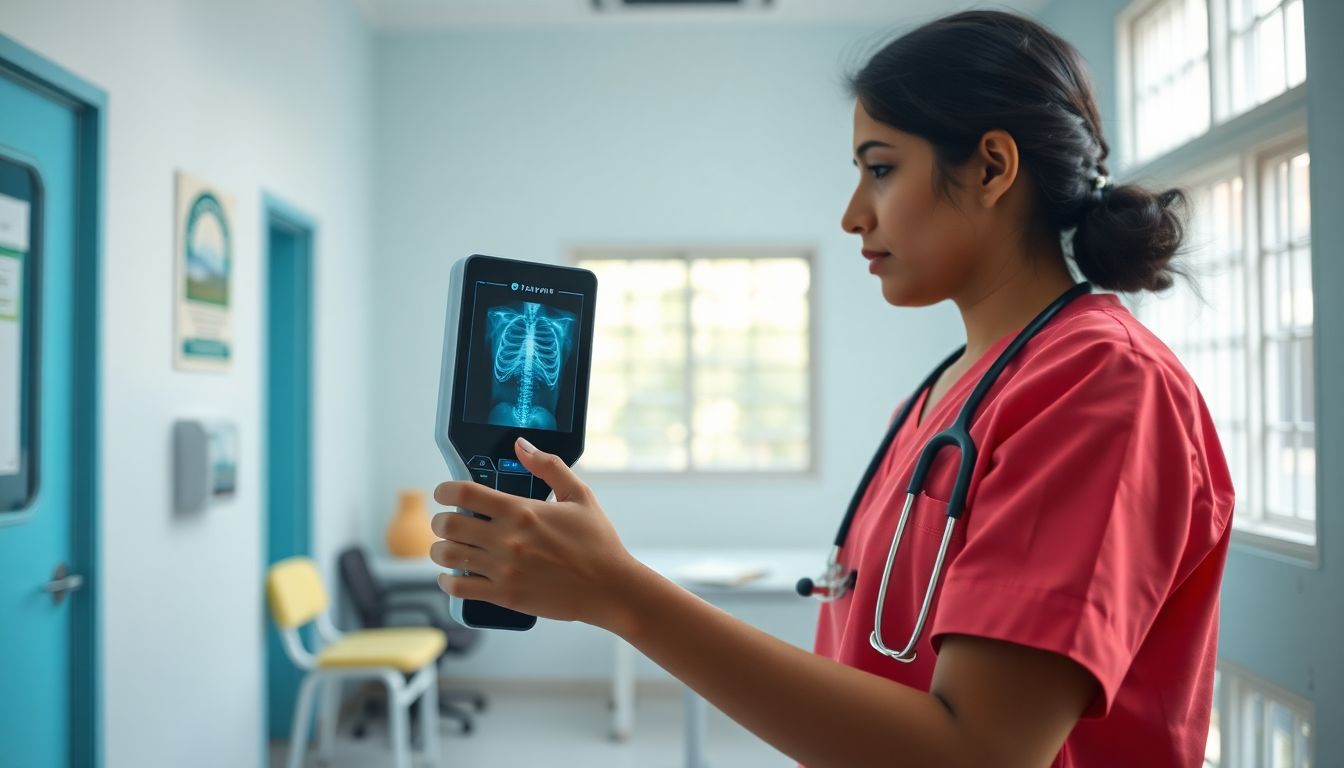
On 6 July 2026, the Union Health Ministry deployed 52 portable, AI-driven handheld X-ray devices on a trial basis across Telangana, including the urban and peri-urban clusters of Uppal, Peerzadiguda, and Pocharam in Hyderabad, to improve tuberculosis (TB) detection and patient monitoring. The initiative, launched under the National TB Elimination Programme, targets remote tribal belts in Adilabad, Kumuram Bheem Asifabad, and Bhadradri Kothagudem, alongside the Hyderabad clusters, to aggressively track missing cases and monitor patient recovery directly within local communities.
The newly introduced technology provides instant chest X-ray analysis, helping healthcare workers identify missed TB cases and monitor patient progress in remote communities. By bringing the diagnostic process directly to the patient's bedside, the initiative aims to reduce patient drop-out rates, which often occur when low-income patients face delays in receiving results.
Traditionally, digital films taken during routine health camps had to be sent to district hospitals for review by specialist radiologists, causing delays of days or weeks. This delay often forced patients to travel long distances to collect results, leading many to drop out of treatment. The new AI-backed mobile devices eliminate this delay by delivering X-ray results on the spot.
The camera-sized, battery-operated handheld units are integrated with DeepCXR, an indigenously developed deep-learning software tool created by the Indian Council of Medical Research (ICMR). This software functions as an automated, on-the-spot X-ray reader that runs locally on basic field hardware. It does not require clinical metadata or external internet connectivity to function.
During field operations, a healthcare worker carries the device into a household to capture a digital chest exposure. Within 30 seconds, the radiograph is wirelessly transmitted via local Wi-Fi or Bluetooth to a paired tablet. Even in areas with zero cellular network, such as deep forests or narrow lanes, the offline AI scans the image to identify structural lung abnormalities, including consolidations, cavities, and fluid build-ups.
The software displays a triage probability score in under a minute to indicate the likelihood of active TB. A score of less than 30 indicates normal lungs, clearing the patient of TB, while a score of more than 70 indicates probable structural damage to the lungs.
Officials noted that field trials have also shown promise in improving long-term treatment adherence. Health workers can perform monthly follow-ups directly in the community, showing patients their lung lesions healing in real time on the tablet screen.