TGiCCC Maps 913 Waterlogging Points Across Hyderabad for Monsoon Response
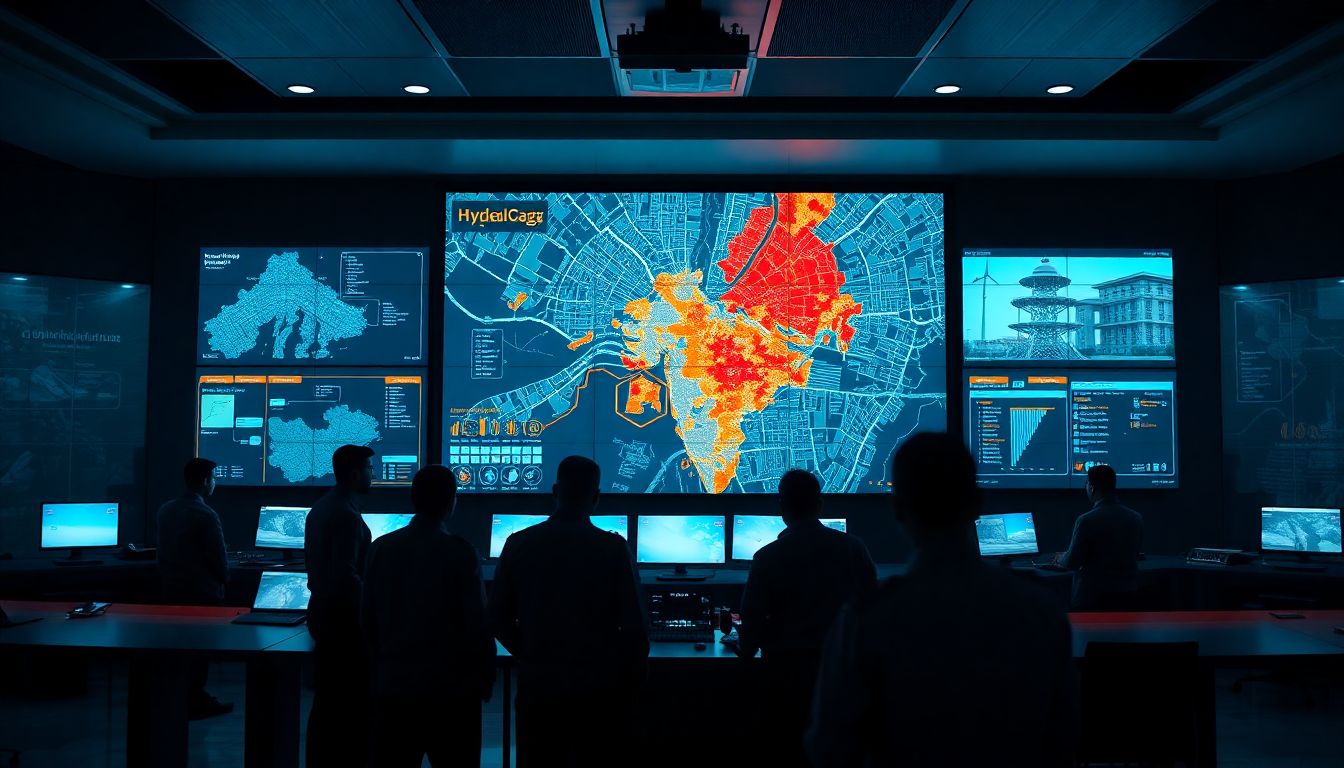
On Thursday, the Telangana Integrated Command and Control Centre (TGiCCC) auditorium hosted an orientation session for Joint Action Teams (JATs) to strengthen monsoon preparedness and disaster response across Hyderabad, Cyberabad, and Malkajgiri. The initiative established an integrated multi-agency mechanism to ensure coordinated action during monsoon-related emergencies.
During the session, officials revealed that 913 waterlogging points have been identified across the three commissionerates. This includes 523 vulnerable locations in Hyderabad, 202 in Cyberabad, and 188 in Malkajgiri.
To enable timely alerts and prioritize field responses, authorities have categorized these waterlogging points by severity. Of the total identified locations, 258 are classified as major, 290 as medium, and 365 as minor vulnerable spots. These areas will undergo continuous monitoring.
The program brought together representatives from numerous state departments and civic agencies. Attendees included officials from the police commissionerates and municipal corporations of Hyderabad, Cyberabad, and Malkajgiri.
Representatives from HYDRAA, the Hyderabad Metropolitan Water Supply and Sewerage Board, TGSPDCL, Fire Services, the State Disaster Response Force (SDRF), and the National Disaster Response Force (NDRF) also participated.
Additionally, officials from the India Meteorological Department (IMD), the Medical and Health Department, the Irrigation Department, the Musi Riverfront Development Corporation, the Telangana Public Distribution System, and the collectorates of Hyderabad, Ranga Reddy, Medchal-Malkajgiri, and Sangareddy districts were present.
V.B. Kamalassan Reddy, the Director of TGiCCC, addressed the participants and emphasized the critical need for seamless coordination among departments during the monsoon. He highlighted that the command and control centre will serve as the central hub for round-the-clock monitoring, real-time information sharing, and verifying data to facilitate a prompt field response.
The training session covered key aspects of emergency management, including weather forecasting, urban flooding, rescue operations, traffic management, and disaster response. Senior officials from municipal corporations, the NDRF, the IMD, HYDRAA, the Fire Services Department, and experts from the Army led the sessions to define the specific roles and responsibilities of the JATs.