Telangana Peak Power Demand Drops by Nearly 5,500 MW After Rains Bring Cooler Weather
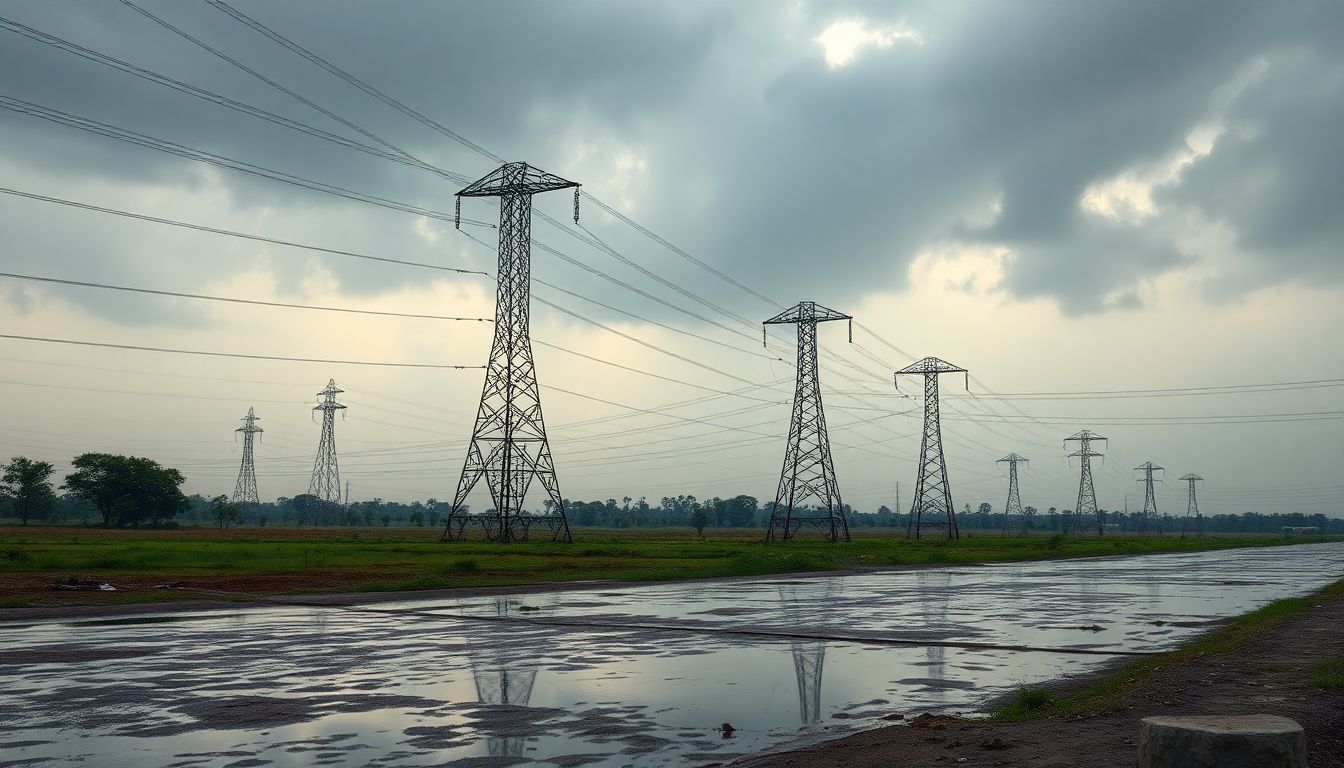
Telangana’s peak power demand dropped sharply to 14,546 megawatts on November 1, falling nearly 5,500 MW below the all-time high recorded two weeks earlier. The reduction followed widespread rainfall and cooler temperatures brought by cyclonic activity across the state, bringing immediate relief to the power transmission grid and state finances.
The decline marked a notable shift from October 16, when peak electricity demand hit a record 20,018 MW during a spell of unusually hot weather linked to El Nino conditions. After that peak, demand gradually eased to 18,216 MW on October 23, 17,636 MW on October 24, and 15,138 MW on October 29, before dropping to 14,546 MW on November 1. It saw a marginal uptick to 14,696 MW on November 2.
Total daily electricity consumption across the state fell alongside the peak demand figures. Daily consumption declined from a record 337.80 million units on October 16 to 270.41 million units on November 2, representing an overall reduction of 67.39 million units. The reduced load significantly lowered the state's reliance on expensive open-market power purchases, which were previously required to bridge supply deficits during September and October.
The agriculture sector continued to stand as Telangana's single largest power consumer, accounting for roughly 40 per cent of overall electricity consumption. More than 30 lakh agricultural pump-set connections in the state collectively draw around 7,000 MW of power each day as farmers continue to irrigate fields using borewells.
Farmers across Telangana cultivated more than 1.25 crore acres during the current Kharif season. Water-intensive paddy accounted for 56.8 lakh acres, while cotton covered 46.34 lakh acres, pulses occupied 7.98 lakh acres, and maize accounted for 5.93 lakh acres. Other crops included soybean on 3.67 lakh acres, sugarcane on 38,000 acres, and jowar on around 35,000 acres, which sustained groundwater pumping in areas facing inadequate rainfall.
In urban areas, Hyderabad remained a major driver of consumption, with the city's peak demand touching 4,782 MW in October and crossing 12,000 MW across the Hyderabad Core Urban Region. Commercial complexes, IT parks, shopping malls, multiplexes, star hotels, and the Hyderabad Metro Rail network contributed heavily to urban loads, while industrial units and cement manufacturing plants accounted for nearly 35 per cent of the state's relatively stable power requirements.