Telangana Farm Ponds Provide Critical Irrigation Amid Rainfall Deficit
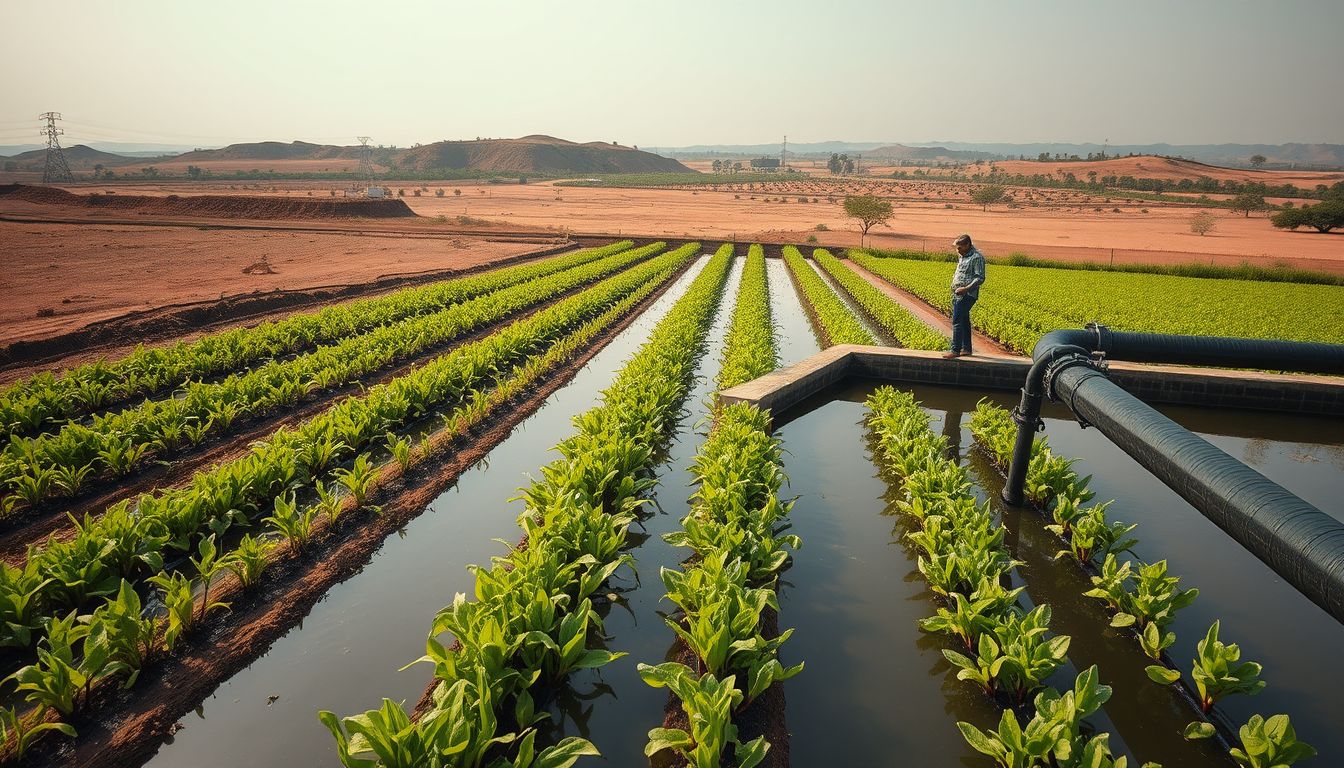
Farm ponds have emerged as a critical source of protective irrigation for farmers across Telangana during the ongoing Kharif season, following deficient rainfall and delayed sowing across several districts.
Rainfall data up to mid-August showed the state received 41 cm of rainfall against the normal 44.5 cm, leaving an overall deficit of about 8 per cent, with 12 districts experiencing the highest shortfall. Drought-like conditions have persisted at the mandal level, prompting agricultural authorities to implement contingency measures including rainwater storage, recharge pits, drought-tolerant crop varieties, and micro-irrigation systems.
Constructed primarily through the convergence of Central and state rural employment guarantee schemes, the farm ponds store rainwater to enable one or two rounds of critical irrigation during prolonged dry spells. Assistance has also been provided under the watershed component of the Pradhan Mantri Krishi Sinchayee Yojana and the Mission for Integrated Development of Horticulture.
According to R. Ramadevi, MPDO and project officer for rural employment guarantee works in Bonakal mandal of Khammam district, a standard 15-metre by 15-metre pond costs Rs 1,78,384. This includes Rs 1,25,136 for labour and Rs 53,248 for materials and stone revetment, generating 406 person-days of work for 40 labourers over 10 days. The initiative prioritises small and marginal farmers owning less than five acres, as well as SC, ST, and women farmers who lack borewells or diesel pumps.
Across the state, 3,173 pond works have been grounded against a broader target of 50,000, engaging 12,619 wage seekers. Under the VB-G RAM G and Telangana Jalasiri programmes, 4,348 sites were identified out of a targeted 13,046 ponds by July 30. Jayashankar Bhupalapally led the state with 363 grounded works, followed by Nirmal with 302. Adilabad identified all 180 ponds allotted to the district, while Medak achieved 90 per cent progress and Mahabubnagar reached 85 per cent.
Officials noted that the ponds must be integrated with field bunding, groundwater recharge, and drip or sprinkler irrigation to maximise effectiveness, while proper maintenance is required to prevent siltation throughout the agricultural season.