Telangana Faces High Student Load Per School as UDISE Report Warns of Dropout Risk
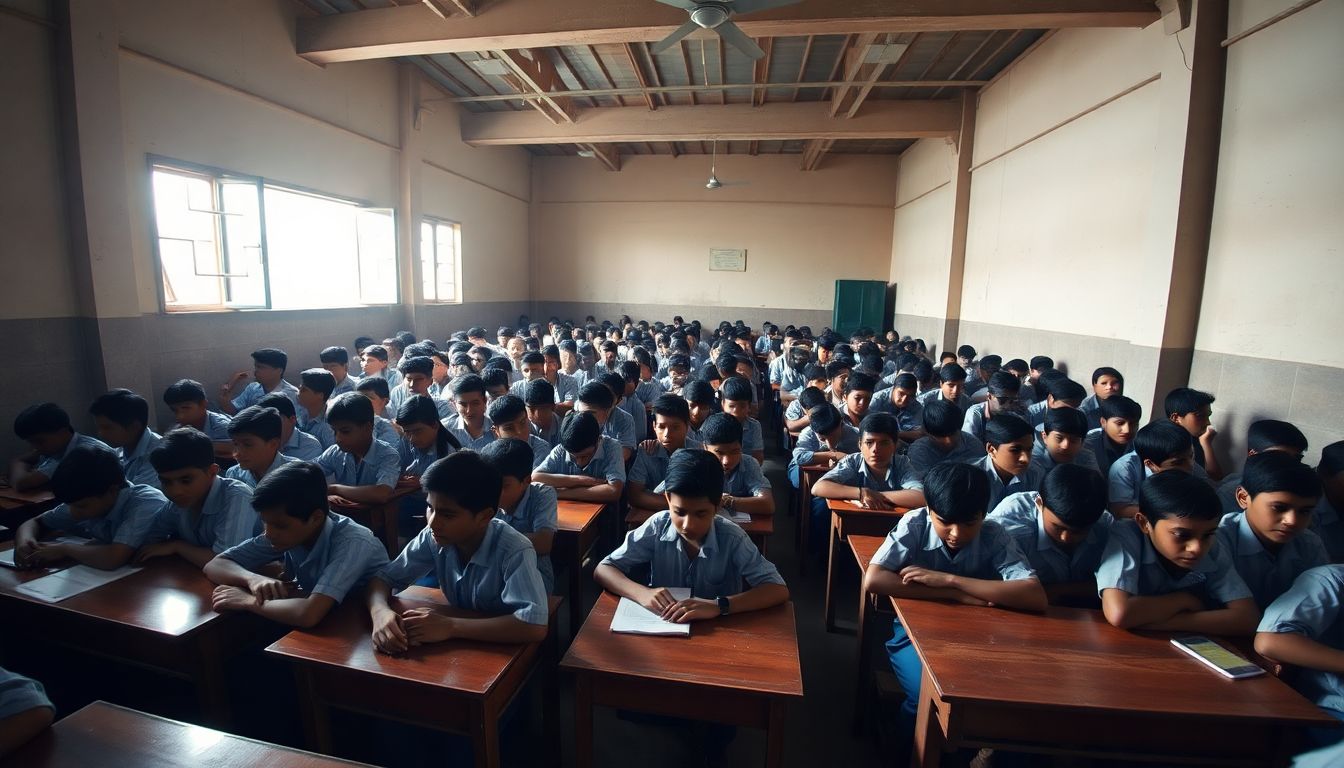
The Unified District Information System for Education (UDISE+) report for the 2025-26 academic year has revealed that Telangana is among the states facing a significant shortage of schools relative to its student population, resulting in overcrowded classrooms and a higher student-to-school ratio. The report highlighted a major national mismatch in education infrastructure, warning that such imbalances could increase the risk of student dropouts in higher classes.
According to the UDISE+ data, Telangana is grouped with states like Maharashtra, Bihar, West Bengal, Tamil Nadu, Gujarat, Punjab, Haryana, Delhi, and Kerala. In these states, the percentage of available schools is significantly less than the percentage of enrolled students, indicating a heavy student load on the existing school network.
Conversely, the report found that states such as Uttar Pradesh, Madhya Pradesh, Rajasthan, Karnataka, Odisha, Andhra Pradesh, Chhattisgarh, Assam, Jammu and Kashmir, Uttarakhand, Himachal Pradesh, and Meghalaya have a higher percentage of schools compared to enrolled students. This has led to the underutilisation of public education infrastructure and suboptimal economies of scale in those areas, with many schools operating far below their actual capacity.
Nationally, the UDISE+ 2025-26 report recorded a total of 14,66,682 schools, 1,02,73,020 teachers, and 24,72,19,766 student enrolments across the country. The data highlighted that while India has a massive school system with 14.67 lakh schools, 1.03 crore teachers, and 24.72 crore students, the uneven distribution of these resources presents a major challenge. The pupil-teacher ratio across India was recorded at 24.
The report noted that the current imbalance in school availability at various levels poses a risk of large-scale student dropouts at higher class levels. This challenge comes amid efforts to align with the National Education Policy (NEP) 2020, which aims to achieve universal participation in school by carefully tracking students and their learning levels. The UDISE+ findings have raised questions about school mapping, resource allocation, and whether education infrastructure is properly aligned with actual student enrolment on the ground.