Telangana Aligns Revised Minimum Wages With Lower ILO Benchmarks
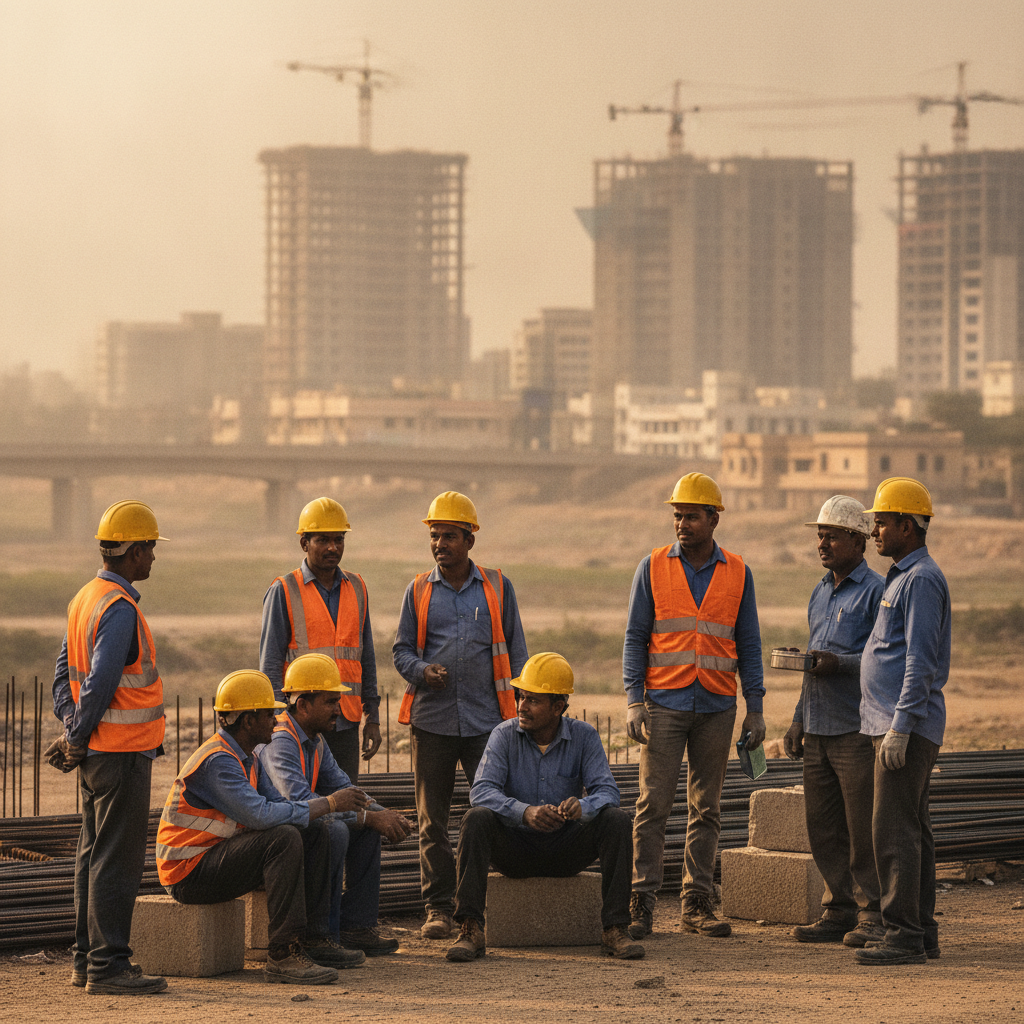
The Telangana government has revised the state's minimum wage structure, aligning the new rates closely with the lower-end benchmarks recommended by the International Labour Organisation (ILO). The wage revision, announced in Hyderabad, represents the state's effort to balance international labor standards with local economic realities.
According to official details, the state government has taken a cautious approach by keeping the revised wages near the baseline of the international standards. The wage increases for workers in Telangana remain concentrated around the lower end of the benchmarks suggested by the ILO's comprehensive study.
Under the newly updated structure, the daily wages for unskilled workers in Telangana have been fixed between ₹538 and ₹615. In comparison, the ILO study had recommended a wider daily wage range of ₹526 to ₹873 for unskilled labor.
For semi-skilled workers, the state has set the daily wages at ₹577 to ₹654. This is compared to the ILO's recommended range of ₹579 to ₹960 per day for the same category of workers.
Skilled workers in the state will now see their daily wages fixed between ₹635 and ₹712. The ILO's recommended benchmark for skilled labor was notably higher, ranging from ₹652 to ₹1,083 per day.
Finally, for highly skilled workers, the Telangana government has fixed the daily wages between ₹692 and ₹769. The international body's study had suggested a daily wage range of ₹728 to ₹1,208 for highly skilled employment.
The comparison between the state's fixed rates and the international benchmarks shows that while the minimum thresholds for some categories slightly exceed the absolute lowest ILO recommendations, the maximum limits set by the state remain significantly below the ILO's upper recommendations. For instance, while the state's minimum of ₹538 for unskilled workers is slightly above the ILO's minimum recommendation of ₹526, the state's maximum of ₹615 falls far short of the ILO's upper recommendation of ₹873.
The decision to align the state's wage structure with the lower-end recommendations of the ILO highlights a policy that aims to be progressive while remaining highly mindful of local economic factors.