Tamil Nadu Approves 1-Year Paid Maternity Leave for Third Child as Fertility Rates Drop
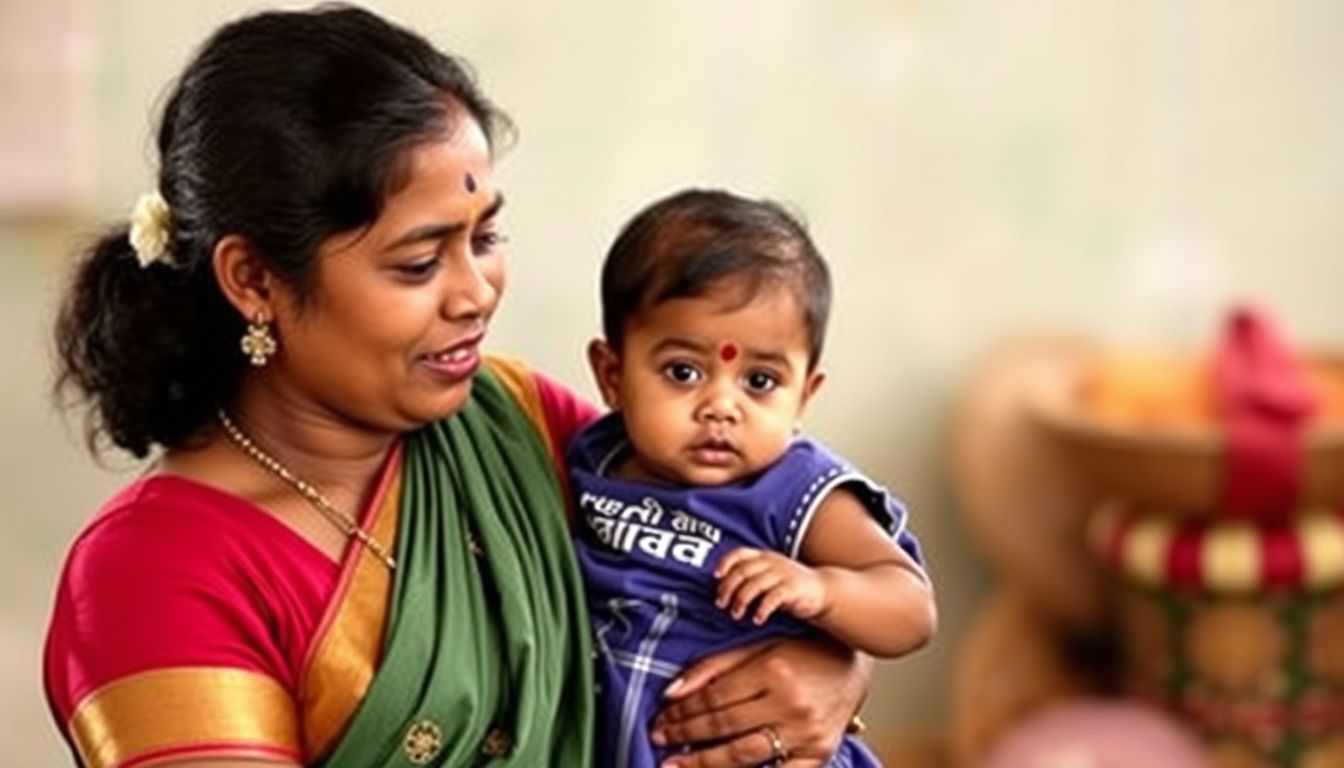
Women government employees in Tamil Nadu will receive one year of paid maternity leave for a third child under a new decision by Chief Minister Vijay, coming amid rising concerns over rapidly falling fertility rates across southern India.
The policy highlights a broader demographic challenge facing southern states, where fertility rates have dropped significantly below the replacement level of 2.1 children per woman. According to the Sample Registration System (SRS) Statistical Report 2024, Tamil Nadu and Kerala recorded a Total Fertility Rate (TFR) of 1.3 in 2024, while Andhra Pradesh stood at 1.4, and Telangana and Karnataka each recorded 1.5. In contrast, India's overall fertility rate was 1.9, with northern states recording higher figures, including Bihar at 2.9, Uttar Pradesh at 2.6, Madhya Pradesh at 2.4, and Rajasthan at 2.3.
Between 2020 and 2024, fertility rates in southern states remained consistently low, with Kerala falling from 1.5 to 1.3 and Andhra Pradesh from 1.5 to 1.4, while Tamil Nadu stayed within the 1.3 to 1.5 range. The demographic shift has prompted responses across the region, including in Andhra Pradesh, where Chief Minister N Chandrababu Naidu recently announced cash incentives of Rs 30,000 for a third child and Rs 40,000 for a fourth child.
Data from SBI Research's Precursor to Census report indicates that South India is the only major region in the country where annual additions of newborns have declined over the past two decades. Annual births in the region fell from 4.3 million in 2001 to 4.2 million in 2011, reaching 4.1 million in 2024. Consequently, South India's share of the country's incremental population growth fell from 15 per cent during 2001–2011 to 12 per cent during 2011–2024. Over the same period, North India's annual births rose from 6.6 million to 7.6 million, and East India's increased from 5.5 million to 6.3 million.
The persistent decline in births has raised concerns regarding the proposed delimitation exercise, which could redistribute Lok Sabha parliamentary seats based on population size, potentially reducing the relative political representation of low-fertility southern states.
In addition, data from the Ministry of Health and Family Welfare's population projections in the India Ageing Report 2023 shows an accelerating elderly demographic. The share of people aged 60 and above is projected to increase between 2021 and 2036 from 13.7 per cent to 20.8 per cent in Tamil Nadu, from 16.5 per cent to 22.8 per cent in Kerala, and from 12.3 per cent to 19 per cent in Andhra Pradesh, with sharp increases also projected for Telangana and Karnataka.