Taj Banjara Hotel Demolished to Make Way for 40-Storey High-Rise in Banjara Hills
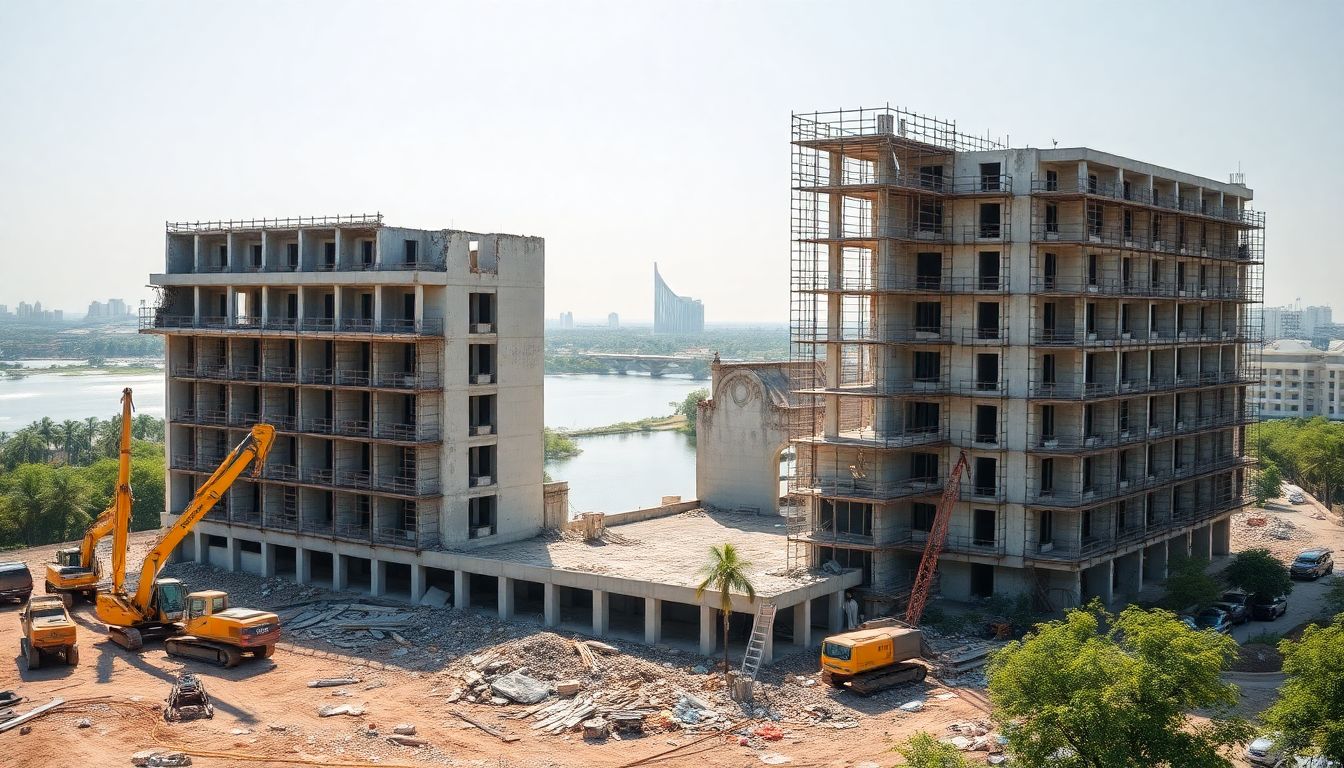
Demolition work has commenced on the iconic Taj Banjara Hotel in Banjara Hills to clear the 3.4-acre lakeside property for a planned 40-storey high-rise real estate redevelopment project. The structural demolition stage began towards the end of April, marking the end of one of Hyderabad's earliest and most recognizable luxury hospitality landmarks.
The transformation of the site, which overlooks Banjara Lake, became visible to the public as workers started dismantling the hotel's outer walls. According to a contractor associated with the demolition, the process began by systematically clearing the building from within.
Workers first removed the doors, windows, electrical wiring, wooden fittings, iron fixtures, and other reusable materials. Only after completely emptying the building did the crew begin demolishing the walls and the main structure. The entire demolition process is expected to take another four months to complete, after which excavation work for the new high-rise project will begin.
While the developer has not officially announced the project, people familiar with the redevelopment stated that a tower of approximately 40 floors is planned on the site. The property was acquired for about ₹315 crore by Auro Realty, a company formerly known as the Aurobindo Group. Auro Realty has been expanding its footprint across Hyderabad with premium residential and mixed-use developments, though it has not yet officially disclosed its plans for the Banjara Hills site.
Spread over a prime lakeside location, the Taj Banjara was among the city's earliest luxury hotels. The property was managed by the ITC Group until 1986, after which operations were taken over by Taj GVK Hotels, which ran the hotel for nearly four decades.
The hotel officially ceased operations in 2023 after its lease expired. Following its closure, the Greater Hyderabad Municipal Corporation (GHMC) sealed the building last year over pending property tax dues of about ₹1.43 crore accumulated over two years. The municipal corporation later removed the seal after a portion of the dues was paid.