Rs 20 Crore Road Construction Underway Up Moula Ali Hill to Aid Devotees
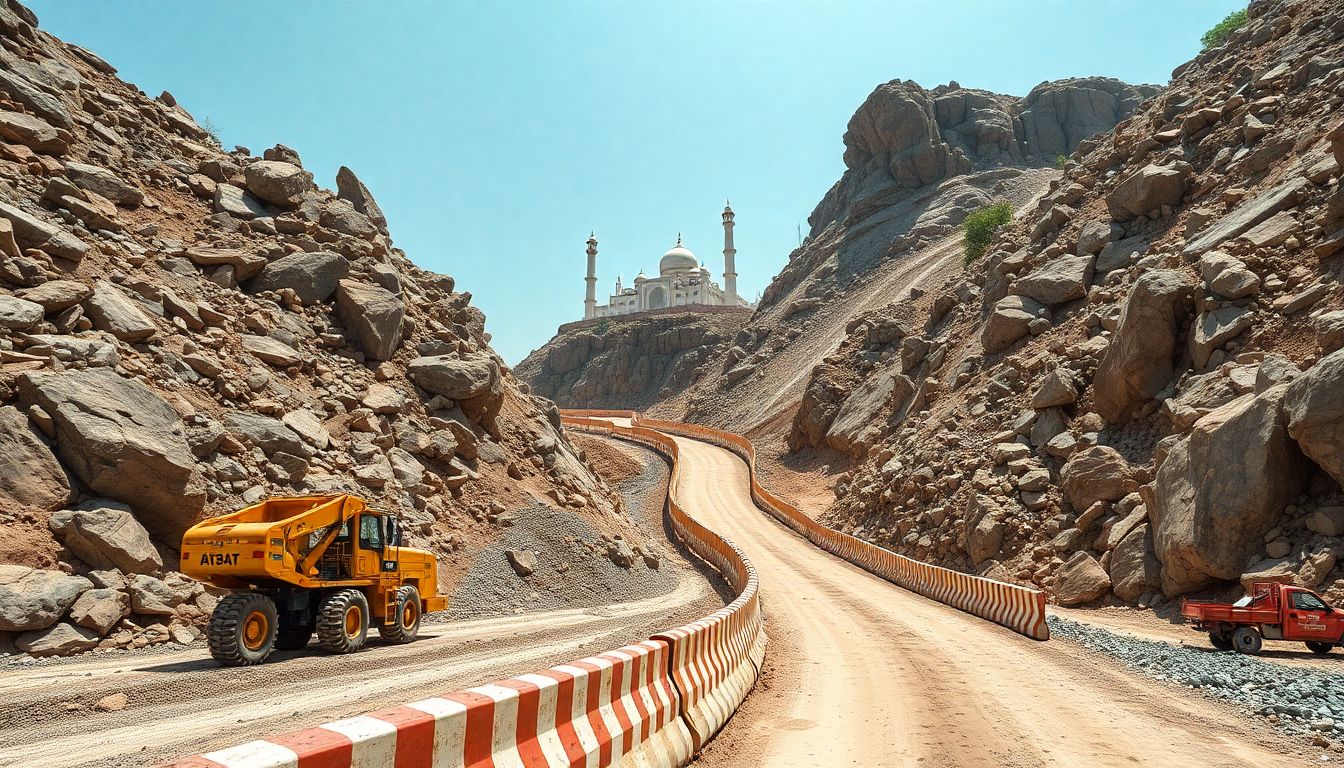
Construction of an estimated Rs 20 crore road-cum-ramp is currently underway up Moula Ali Hill, located approximately 10 miles north of Hyderabad, to provide direct vehicular access to the historic dargah of Hazrat Ali. The project is designed to help elderly devotees and visitors reach the hilltop shrine without having to climb its steep 507 steps, though the works have triggered conservation concerns among local residents regarding damage to the historic rock formations.
The hill, also known as Koh-e-Moula Ali, rises about 2,017 feet above sea level. Sayeed, supervisor at the dargah, said the road was undertaken after repeated appeals from devotees who travel from other states and abroad. He noted that climbing the 507 steps has proven difficult for elderly people, and the ramp is meant to ease their ascent to the shrine.
Funding for the project is being supported through the involvement of political leaders and parties. Once completed, the proposed road will provide vehicular access, parking facilities at the top of the hill, and a dedicated security post. Sayeed stated that security remains a concern at night due to youths gathering for illegal activities, prompting shrine management to submit multiple requests to police seeking regular patrols.
Alongside the road works, restoration of the dargah structure has commenced after several years, funded by a donation from Kamran Mirza Shakeebai to repair walls, ceilings, and glass elements. The shrine previously tackled basic civic issues, including road and drainage works at the foothill to prevent waterlogging, as well as the installation of a power transformer with the help of former MLA Mynampally Hanumanth Rao.
The site draws roughly 5,000 visitors normally and upwards of 10,000 during festivals. The hill has a centuries-old history dating to the Qutb Shahi era, when Yakut, an attendant of Sultan Ibrahim Qutb Shah, reported dreaming of Hazrat Ali and finding a palm impression on a rock. Sultan Ibrahim Qutb Shah subsequently ordered a boundary wall built, establishing traditions such as the Sandal ceremony on the 16th of Rajab and the Charaghan illumination on the 17th of Rajab.
However, some local residents argue the engineering work is disfiguring the landscape. Local resident Hussain said that while development was welcomed, drilling was initially planned at only two points, but extensive rock drilling is now taking place with large stones being moved to the bottom. He stated the appearance of the hill is changing and suggested that alternatives, such as a ropeway, should have been considered instead.