Prehistoric rock paintings discovered at Saragundlu hillocks in Rajanna Sircilla
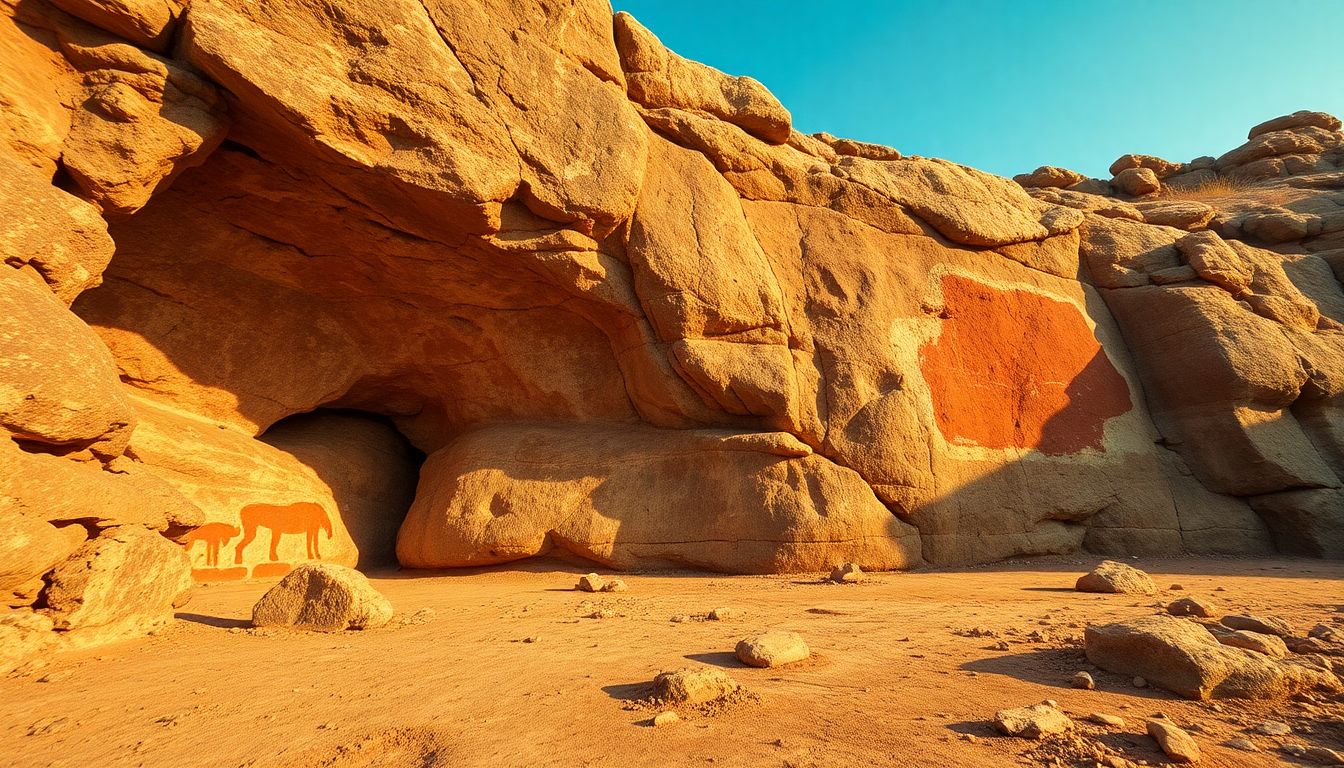
A team of researchers recently discovered rare prehistoric rock paintings and stone tool sharpening grooves at the Saragundlu hillocks near Jillella village in Rajanna Sircilla district. The significant archaeological find sheds new light on prehistoric human activity, habitation, and stone tool technology in the region.
The discovery was made during a field survey conducted by a group of researchers, including Kondaveeti Gopi, Ahobilam Karunakar, Samaleti Mahesh, Patharla Joel, and Daripelli Balayya.
According to the team, the newly found rock paintings were executed using red pigment. Along with the art, the researchers identified sharpening grooves that had been carved directly into the bedrock. The researchers believe these grooves were utilized by prehistoric communities to sharpen their stone tools. The presence of these markings is regarded as crucial evidence of repeated, ongoing human activity at the Saragundlu hillocks site.
The discovery has the potential to significantly enhance the current understanding of prehistoric habitation, artistic expression, hunting traditions, and stone tool technology within the Sircilla district.
To build on these initial findings, the research team announced that they will conduct detailed scientific studies at the site. These future studies will focus on examining the specific pigments, motifs, and artistic styles of the rock paintings. The team hopes this analysis will provide fresh insights into the daily lives and cultural practices of the prehistoric communities that once lived in the area.
Following the field survey, the researchers urged the department of heritage to step in. They have requested the department to undertake official scientific research at the site and to initiate the necessary steps to notify the Saragundlu hillocks as a protected heritage monument. According to the team, official recognition and protection are essential to ensure the preservation of these ancient artifacts.