PJTSAU Natural Dye Centre in Hyderabad Produces Eco-Friendly Paints for Clay Idols
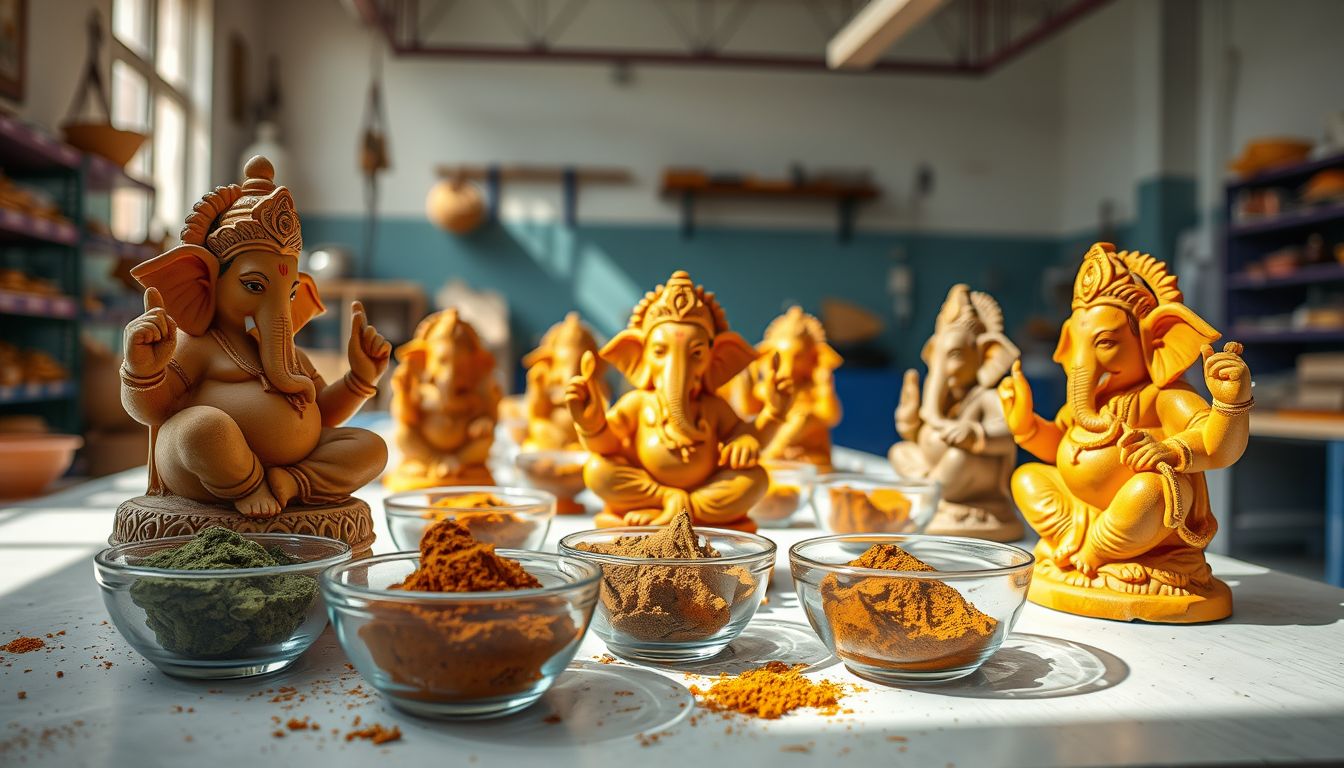
The Natural Dye Processing and Incubation Centre (NDPIC), functioning under the Professor Jayashankar Telangana Agricultural University (PJTSAU) in Hyderabad, is manufacturing biodegradable paints for clay Ganesha idols to offer a safer alternative to synthetic colours.
The initiative aims to reduce the environmental and health risks linked to synthetic dyes, which often contain toxic heavy metals such as mercury, cadmium, and lead. When painted idols are immersed in water bodies at the conclusion of festivities, these heavy metals enter aquatic ecosystems and pose severe hazards to human health.
The large-scale natural-dye paint production facility was established following a ₹1 crore project sponsored by the Telangana State Pollution Control Board (TSPCB) in 2016, titled "Biodegradable ecopaint production for idol painting with natural dyes on large scale." The facility is the first of its kind in India and has an operational capacity to produce two tonnes of natural-dye paint per day.
Formulations for the eco-friendly paints used on clay Ganesha idols, as well as 'Eco-Holi' powders, were developed by the College of Home Science in Hyderabad. The production process involves natural raw materials, such as boiling sappan heartwood in water to extract natural pigments that are subsequently formulated into sprayable and brushable paints.
Beyond festival colours, the incubation facility supports weavers, artisans, and entrepreneurs by offering training and access to its infrastructure for pilot-scale product development.
The push for biodegradable alternatives comes amid ongoing environmental concerns regarding idol immersion across the city. While the Telangana High Court has issued directives encouraging the use of eco-friendly clay, artisans in areas such as Dhoolpet continue to manufacture large Plaster of Paris idols to meet persistent market demand. The university centre continues to promote natural dyes to allow traditional celebrations without causing ecological harm.