Minister Sridhar Babu launches Project SHUDH, an AI-powered sewer governance platform built by Hyderabad's The Bot Factory
Telangana IT Minister D. Sridhar Babu launched Project SHUDH, an AI and robotics platform by Hyderabad startup The Bot Factory that aims to end manual manhole entry and bring real-time 'sewer governance' to civic bodies like GHMC and HMWSSB.
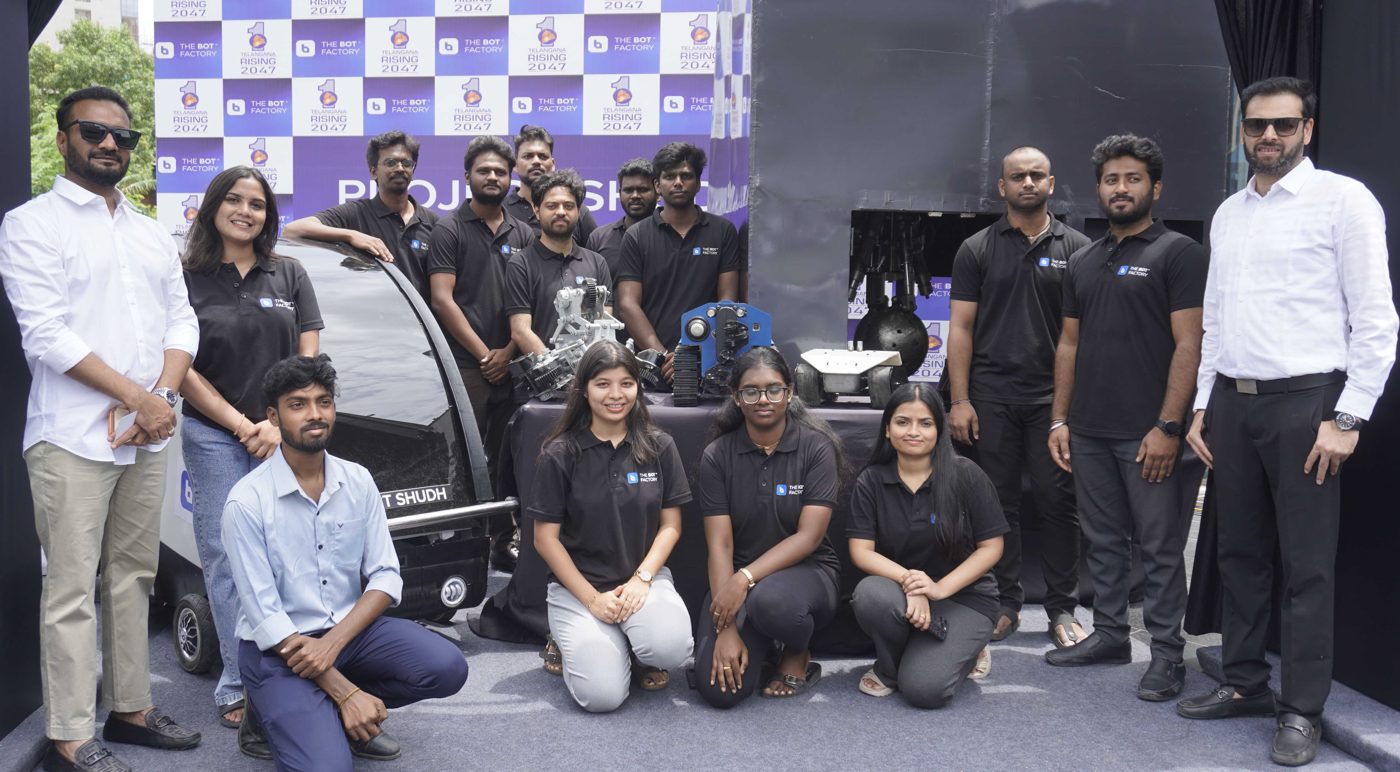
Telangana IT and Industries Minister D. Sridhar Babu on Saturday launched Project SHUDH, an AI-powered sewer governance platform developed by Hyderabad-based deep-tech startup The Bot Factory, describing it as a pioneering example of how advanced technology can solve critical urban problems.
The platform was unveiled at T-Works, the state-run prototyping hub where The Bot Factory is incubated. Developed under the guidance of the All India Robotics Association (AIRA), Project SHUDH combines autonomous robots, artificial intelligence, GIS mapping and predictive analytics to monitor and manage underground drainage networks — with the explicit goal of ending unsafe manual entry into manholes and sewers.
“Project SHUDH shows how emerging technologies can be applied to real civic challenges,” Sridhar Babu said, adding that trials conducted with the city’s Metro Water works had shown “encouraging results” in identifying drain blockages, generating alerts and feeding data into predictive analytics. He said the system could be “highly beneficial” to civic agencies such as the GHMC and the Hyderabad Metropolitan Water Supply and Sewerage Board (HMWSSB), particularly in reducing overflows during the monsoon.
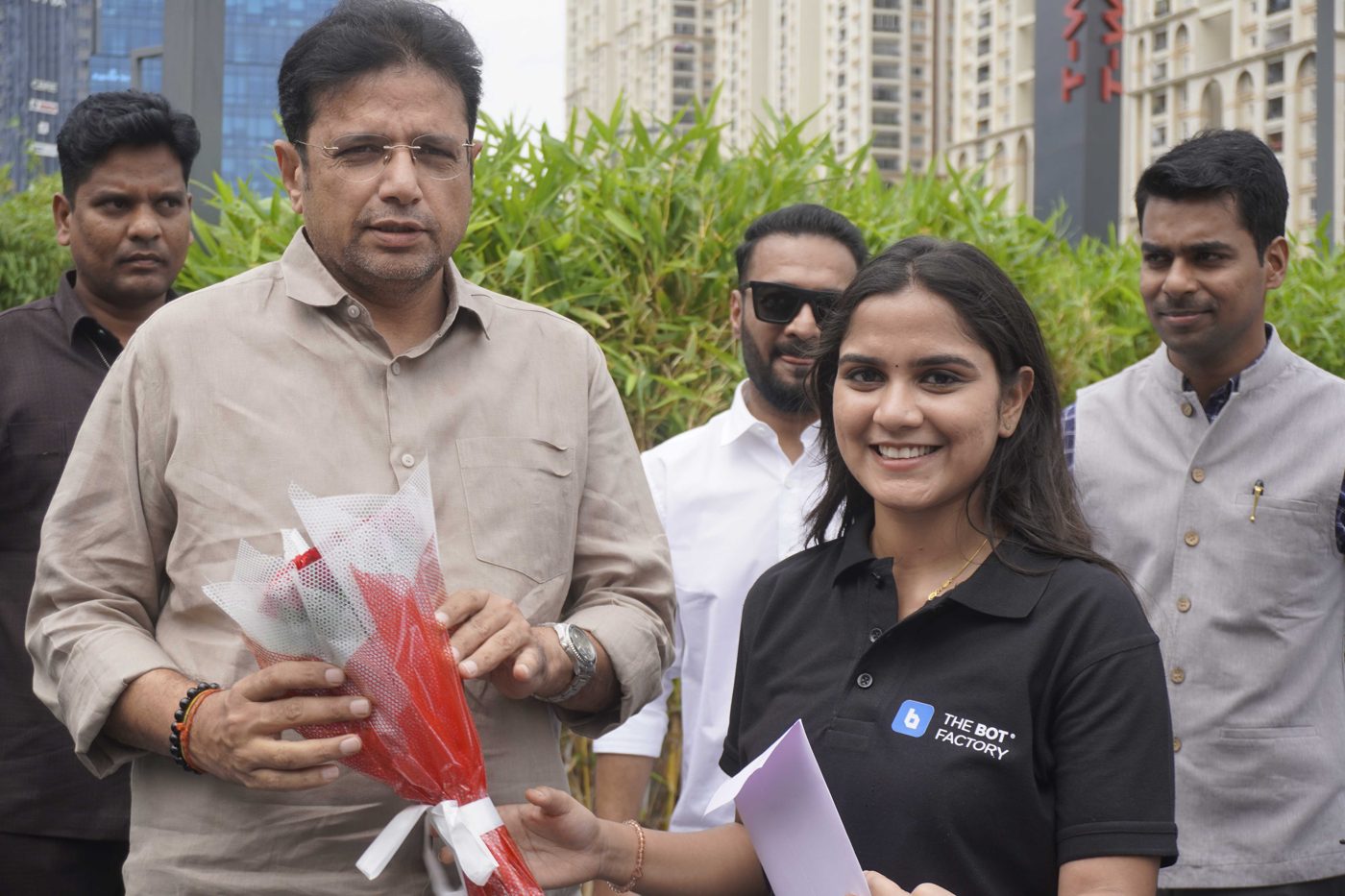
The launch was attended by HMWSSB Managing Director Ashok Reddy, GHMC Commissioner R.V. Karnan, AIRA Chairman Kishshhan, and The Bot Factory’s Anil Bang, Nihitha and Akilan, among others.
Ashok Reddy said that while the water board had used robotic tools in specific operations before, Project SHUDH marked its first major effort to monitor and manage sewer pipelines through intelligent robotic systems. He said several trials had already been run, the results were promising, and the board planned a pilot deployment in a selected area before scaling up.
From sewer cleaning to ‘sewer governance’
Nihitha, Robotics Head at The Bot Factory, said the project grew out of a disaster-management robotics initiative and represents a shift “from sewer cleaning to sewer governance.” Unlike conventional machines that focus only on mechanised cleaning, she said, SHUDH is built as a governance platform where every intervention is digitally tracked, recorded and analysed.
The system integrates autonomous sewer-cleaning robots, AI, GIS and satellite-based monitoring, predictive analytics for blockage detection, and real-time dashboards for civic authorities. It can operate in both vertical manholes and horizontal pipelines while generating live operational data and digital maps of the drainage network.
The Bot Factory, a Hyderabad deep-tech company working on robotics for public safety and urban infrastructure, says the long-term aim is to help cities reach “zero manual sewer entry” — improving worker safety, cutting costs and building a modern, auditable framework for underground assets.
A national safety challenge
India’s sewer and septic infrastructure remains largely under-mechanised. When jetting machines, suction equipment and desilting vehicles fail to clear a blockage, workers are often still sent into manholes, exposing them to hazardous and sometimes fatal conditions. Project SHUDH’s backers position it against that backdrop — aligning, they say, with national priorities on worker safety, Smart Cities and digital governance.