Hyderabad Rs 14,725 Crore Underground Power Cable Project Delayed Over Funding
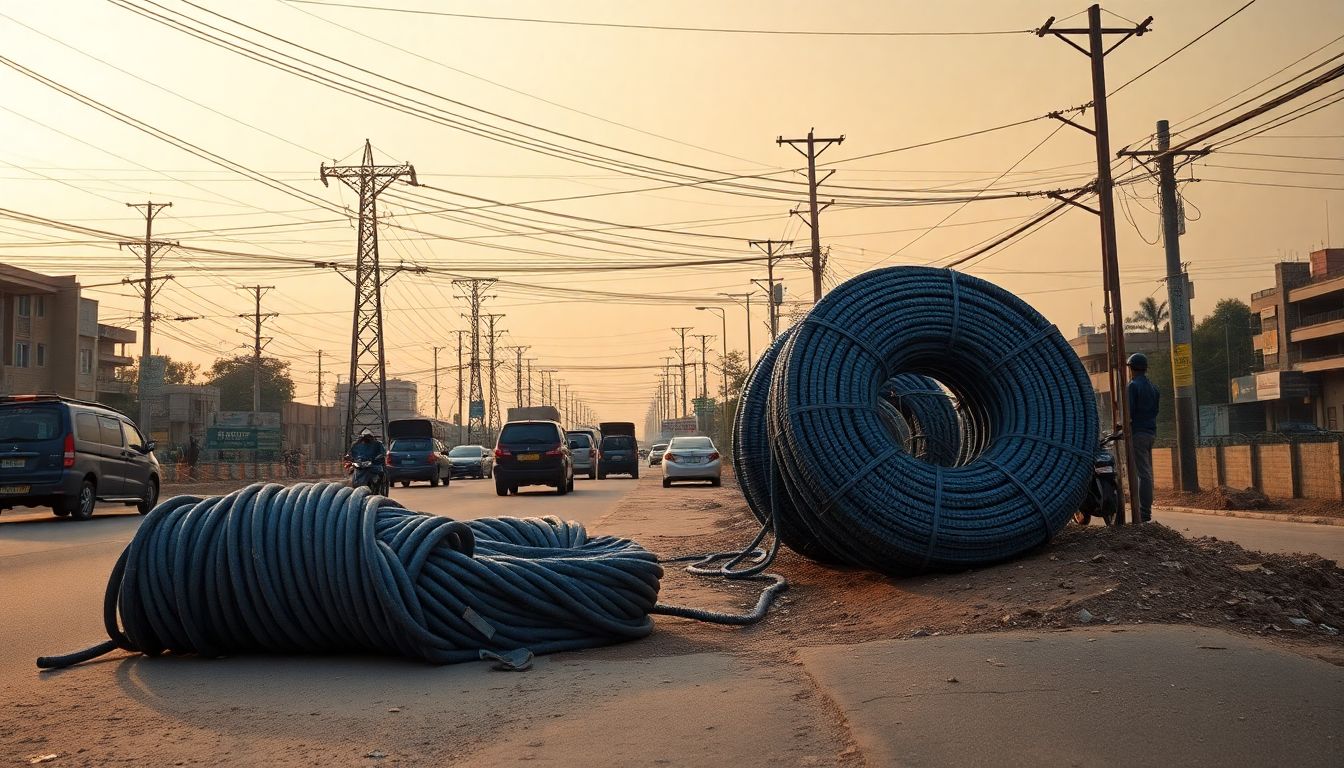
The Congress-led Telangana government's ambitious Rs 14,725-crore project to lay underground power cables across Hyderabad has been delayed due to funding constraints and unresolved implementation issues. The delay affects the first phase of the infrastructure project, which was approved for the Metro zone covering circles including Banjara Hills, Secunderabad, Hyderabad Central, and Hyderabad South.
The State Cabinet had approved the proposal to establish the underground power distribution network in November last year. This decision followed a visit by Deputy Chief Minister Mallu Bhatti Vikramarka to Bengaluru in May last year, where he studied that city's underground cabling system. State officials also examined best practices from other states before preparing the Hyderabad proposal.
Based on those studies, officials estimated that implementing the network across the Greater Hyderabad Municipal Corporation (GHMC) limits would require a total investment of Rs 14,725 crore. The plan involved dividing the city into three operational zones for phased implementation, which would also carry T-Fibre and other communication cables.
For the first phase, the Telangana Southern Power Distribution Company Limited (TGSPDCL) prepared a proposal to convert overhead lines to underground cables in the Metro zone at an estimated cost of Rs 4,051 crore. The government approved this phase through G.O. Ms. No. 43 in November last year, and TGSPDCL subsequently submitted a Detailed Project Report (DPR).
The government originally proposed funding the project through TGSPDCL’s internal resources or borrowings, alongside a cost-sharing mechanism with telecom operators, internet service providers, and T-Fibre.
However, the project has not progressed. A senior official acknowledged that the funding model remains undecided, specifically whether a single agency or multiple agencies should handle the execution, operation, and maintenance.
The project also faces coordination challenges with other departments due to existing underground water pipelines, sewerage networks, and the need for recurring road-cutting. Officials stated that the government is currently prioritising the establishment of a third DISCOM in the state, meaning the cabling project is likely to be delayed until that initiative is completed.