Hyderabad Researchers Develop AI Tool to Detect Breast Cancer With 95% Accuracy
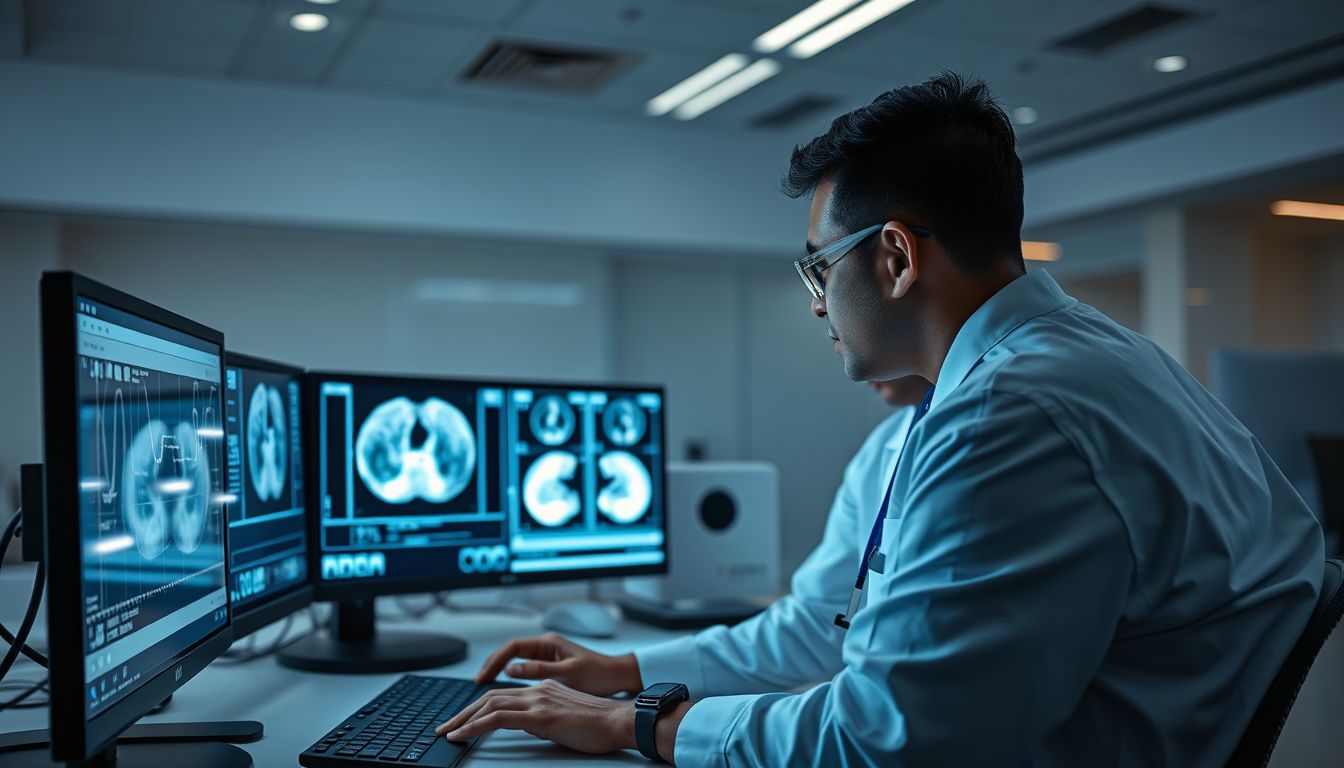
Researchers in Hyderabad have developed an artificial intelligence-based system to detect breast cancer from mammogram images, achieving nearly 95% accuracy while using less computing power and memory than several comparison models.
The study, titled “Fuzzy based residual shufflenet based breast cancer detection using mammogram images”, was authored by Kumari Jelli and Pavan Kumar Pagadala from the Department of Computer Science and Engineering at Koneru Lakshmaiah Education Foundation. The research was published in Scientific Reports of Nature Portfolio.
The team developed a model named Fuzzy RS-Net to identify signs of breast cancer in mammograms. The system is designed to improve image analysis while cutting down the required computing resources. It also integrates a method to handle uncertainty in mammogram images where abnormalities can be difficult to distinguish clearly.
When evaluated on the Curated Breast Imaging Subset of the Digital Database for Screening Mammography, a publicly available mammogram dataset, the model recorded 94.9% accuracy, 95.8% sensitivity, and 93.8% specificity. Sensitivity measures how effectively the system detects cancer cases, while specificity reflects its ability to correctly identify cases without cancer.
The system works by first reducing unwanted noise in mammogram images, isolating areas that may require attention, and analysing patterns within those sections to classify the images. Statistical tests demonstrated that the improvement over benchmark models was significant, with p-values below 0.05. The model also maintained its performance when evaluated across other public mammography datasets.
The authors noted that the system has so far been tested exclusively on public databases. They recommended further validation using larger and more diverse patient data to reduce dataset bias and assess real-world performance. They also called for clinical hospital testing and the integration of explainable artificial intelligence tools to help doctors understand the model's findings.
Citing World Health Organization figures, the study noted that more than 2.3 million women were diagnosed with breast cancer in 2020, leading to over 685,000 deaths. The researchers stressed that early detection is critical, particularly because manual examination of large volumes of mammograms is time-consuming and subtle abnormalities can be difficult to spot.