Hyderabad Noise Levels Exceed National and WHO Limits Across Multiple Zones
Noise levels across designated silence, residential, and commercial zones in Hyderabad—including Jubilee Hills, Tarnaka, JNTU, Abids, Zoo Park, and the University of Hyderabad—exceeded national permissible limits and World Health Organization recommendations between January and July 2026, according to Telangana Pollution Control Board (TGPCB) monitoring data.
Data gathered from 10 TGPCB monitoring stations across the city showed noise levels touching 71 dB in silence zones, nearly 20 dB above the national daytime limit of 50 dB. The WHO recommends average road traffic noise remain below 53 dB during the day and 45 dB at night.
In residential areas, Jubilee Hills recorded daytime levels between 56.7 dB and 70.5 dB, and nighttime levels ranging from 52.2 dB to 57.3 dB. Tarnaka registered 58.2 dB to 60.8 dB during the day and 58.2 dB to 59.6 dB at night.
Commercial and silence zones saw similar breaches. JNTU consistently recorded daytime noise between 69 dB and 71 dB, breaching India's 65 dB commercial limit, while Abids exceeded nighttime limits over several months. In silence zones, Zoo Park registered 54 dB to 62 dB during the day and up to 68 dB at night, against limits of 50 dB and 40 dB, respectively. The University of Hyderabad recorded 68 dB to 71 dB during the day and 67 dB to 70 dB at night.
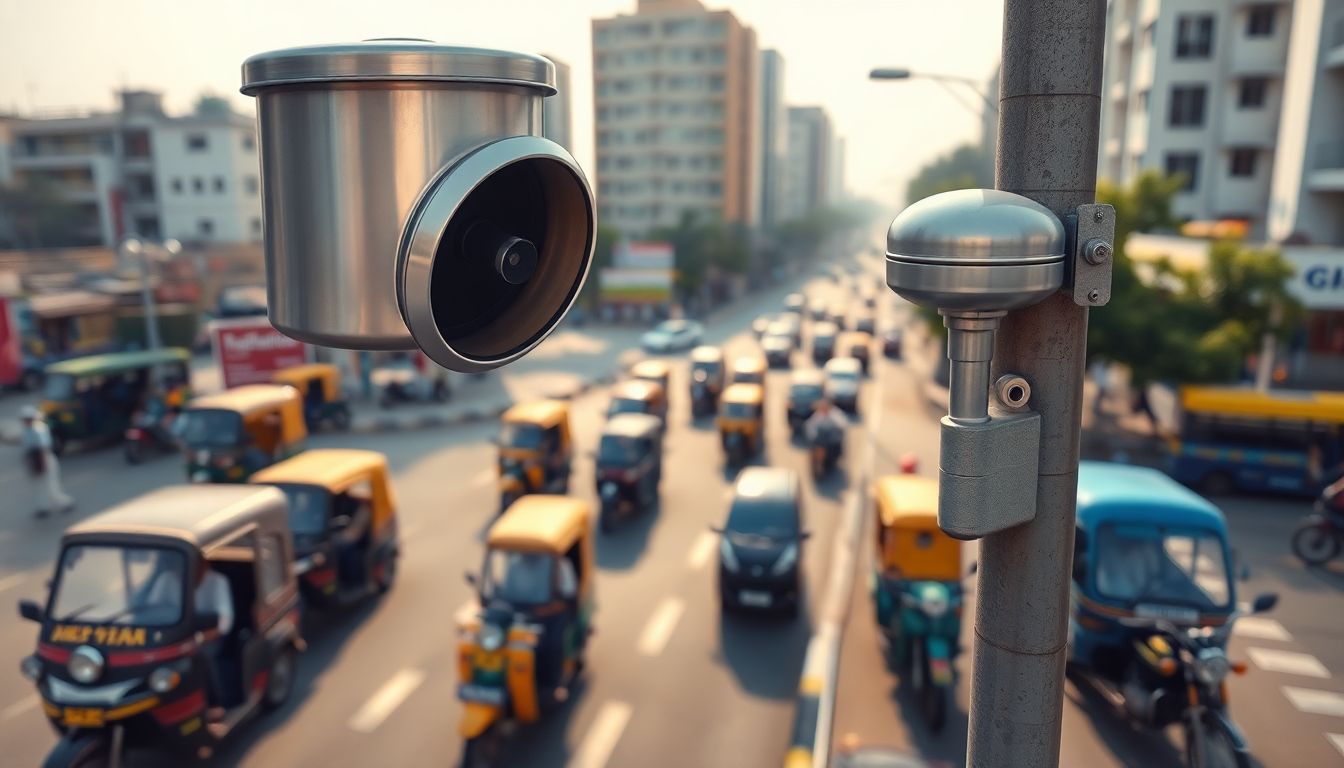
Major contributors to the elevated noise levels include increasing vehicle numbers, unnecessary honking, and ongoing construction activity. Traffic expert Lokendra Singh, known as the Hyderabad Traffic Man, noted that traffic authorities experimented with acoustic cameras at signals in 2020 to automatically penalize noisy vehicles, but the initiative was discontinued following the Covid-19 pandemic. He added that unnecessary honking accounts for roughly 70 percent of road noise.
Environmentalist Prof. Purshottam Reddy emphasized that noise pollution receives less attention than air and water pollution, advocating for the expansion of green spaces and vegetation to serve as natural sound barriers. Health experts warned that prolonged exposure to high noise levels contributes to sleep disruption, anxiety, hypertension, cardiovascular disease, reduced productivity, and impaired learning in children. They recommended restricting construction hours, enforcing honking curbs, protecting silence zones, improving traffic management, and publicly disclosing location-specific noise data.