Five IIIT-Hyderabad AI Research Projects Selected for NeurIPS 2026
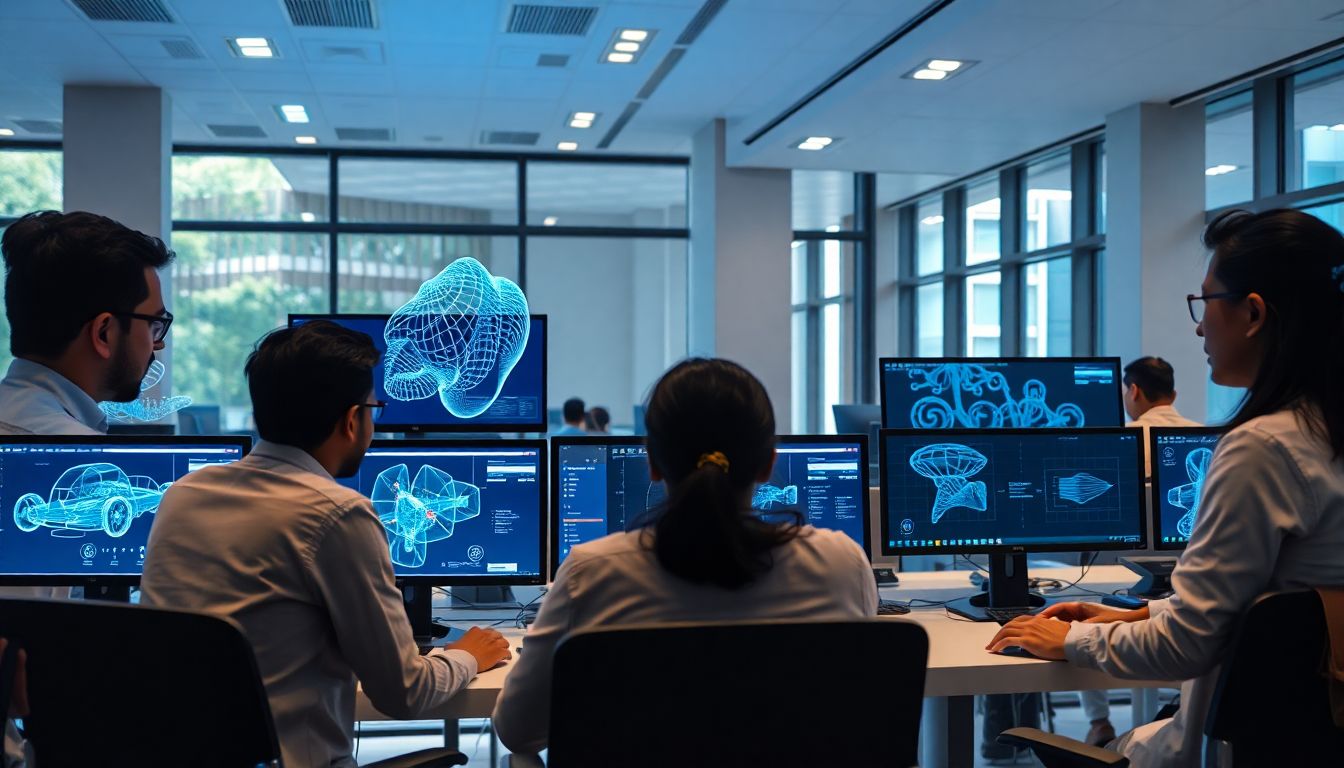
Five research projects from the International Institute of Information Technology, Hyderabad (IIIT-H), have been selected for presentation at NeurIPS 2026, a leading international artificial intelligence conference. The accepted works span advancements in motion generation, fine-grained image control, and techniques to make AI systems fairer and more computationally efficient.
Among the selected initiatives is ENACT, a project led by Prof. Charu Sharma that uses existing artificial intelligence tools to analyse a photograph of an indoor room, plan an action, and generate corresponding animated human movement. The system pairs casual photographs with free-form text instructions to construct realistic movements.
Prof. Sharma noted that since casual images of indoor spaces are abundant, the team leveraged them alongside text instructions to build animated motion. The resulting technology is intended to help produce training material for robots. However, the system is currently limited to static scenes and cannot yet execute complex physical interactions, such as carrying objects or opening drawers.
A second selected paper, developed in collaboration with Adobe Research, focuses on enhancing precision in AI-generated imagery by introducing part-level control. The technique enables users to manipulate specific elements, such as an animal's left front leg, rather than having to modify the entire subject as a single entity.
Harsh Rangwani of Adobe Research highlighted the importance of the work, stating that part-level control remains an open problem for existing image generation models, including Nano Banana2 and Flux2.0. The collaborative framework aims to give creators more granular control over complex generated subjects.
Two other accepted papers address fairness and multi-agent systems. Safe-Fair MACPO, developed by Ankita Kushwaha, Kiran Ravish, and Preeti Lamba under Prof. Pawann Kumar, monitors whether AI agents shoulder disproportionate workloads by measuring "fairness debt" while maintaining safety priorities. Meanwhile, FedUCA, led by Prof. Sai Kiran Bulusu alongside researchers from the Indian Institute of Science (IISc), tackles the issue of organisations abandoning collaborative AI training by aligning their contributions with the benefits they anticipate receiving.
The fifth project, TernaryLM, developed by Prof. Priyesh Shukla and Nisharg Nargund, is a 132-million-parameter language model restricted to three parameter values: -1, 0, and +1. The model consumed 2.4 times less memory than a comparable 32-bit model and scored 82.47 per cent on the MRPC benchmark, outperforming DistilBERT despite requiring 55 times less training data. TernaryLM will be presented at the GlobalSouthAI workshop at the conference.