Bonalu Festival Begins at Golconda Fort in Hyderabad as Thousands of Devotees Gather
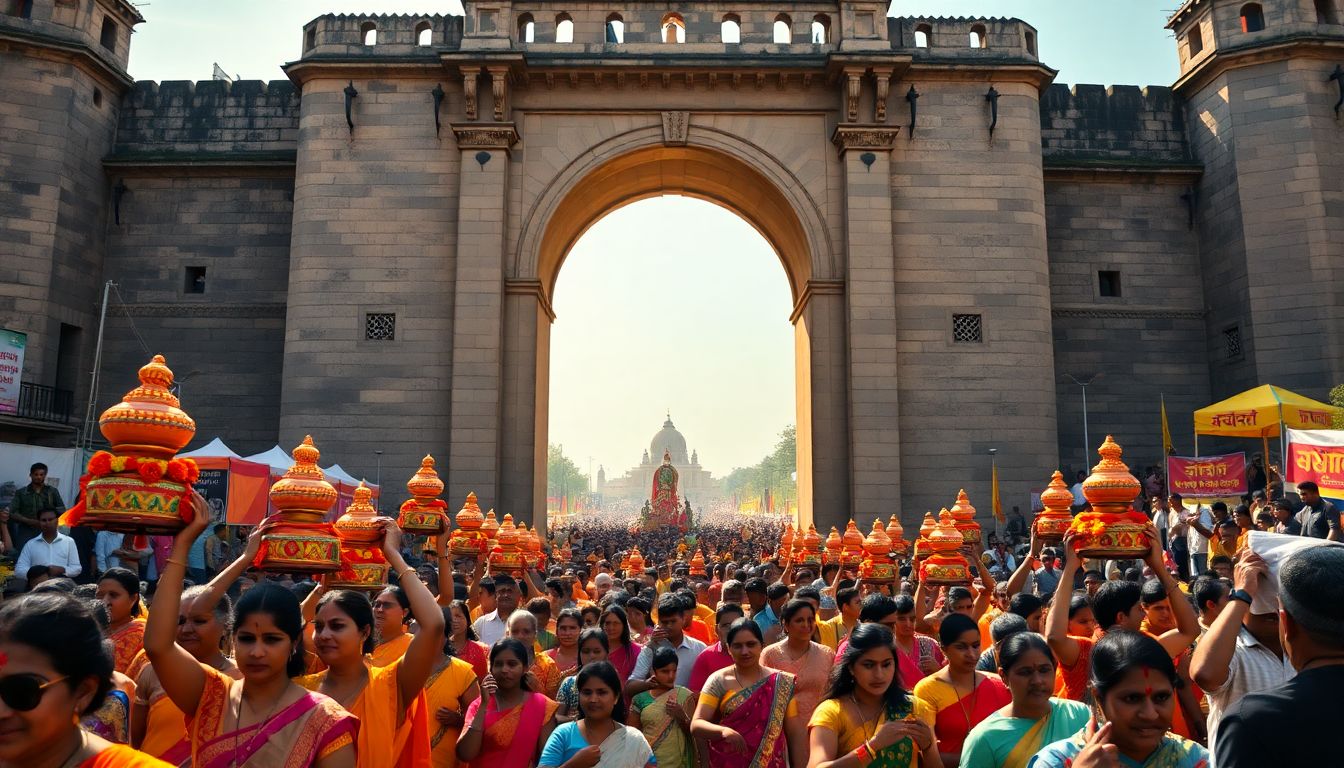
The annual month-long Bonalu festival commenced on Thursday, July 17, 2026, as thousands of devotees converged at the historic Golconda Fort in Hyderabad to offer prayers and traditional food to Goddess Jagadambika. The celebrations began with a grand procession starting from a small temple near Langar Houz, marking the start of the major cultural and religious festival in Telangana.
The main procession covered a distance of about 800 meters from the Langar Houz temple to the main doorway of the inner fortification of Golconda Fort. Traditional priests, known as potharajus, chanted and ululated prayers to the Goddess while drummers maintained a steady rhythm. Some bare-torsoed potharajus swung whips around, while others demonstrated swordplay. Devotees dressed in festive finery, with some cross-dressing, danced their way up the hillock to the Jagadambika temple located at one of the highest points of the fort.
To manage the massive gathering, local civic bodies deployed extensive resources. The Hyderabad Police threw a security cordon around the fort. Meanwhile, the Hyderabad Metropolitan Water Supply and Sewerage Board and the Greater Hyderabad Municipal Corporation deployed hundreds of staff members to manage water supply and sanitation across the vast grounds of the fort as devotees prepared and distributed food.
The term Bonalu refers to food offerings. Golnaka Sai Bonam, a Jogini who completed her offering, explained that her role is to carry the ritual food, or naivedyam, up the hill to the Goddess. She also provides astrological services to believers during the rest of the year.
Devotees traveled from various regions to participate in the festival. Anil Swamy, a devotee who traveled about 60 kilometers from Shadnagar to Hyderabad, detailed the traditional preparations. He shared that offerings included parvanam (milk porridge with rice), peruguannam (curd rice), aku kuru (leafy vegetable), and pachchi pulusu (a tamarind preparation). Devotees also made animal sacrifices, including lambs and chickens, as part of the offerings to seek the Goddess's continued bounty.