BITS Pilani Teams Develop Portable IoT Device to Detect TKX-50 Explosive
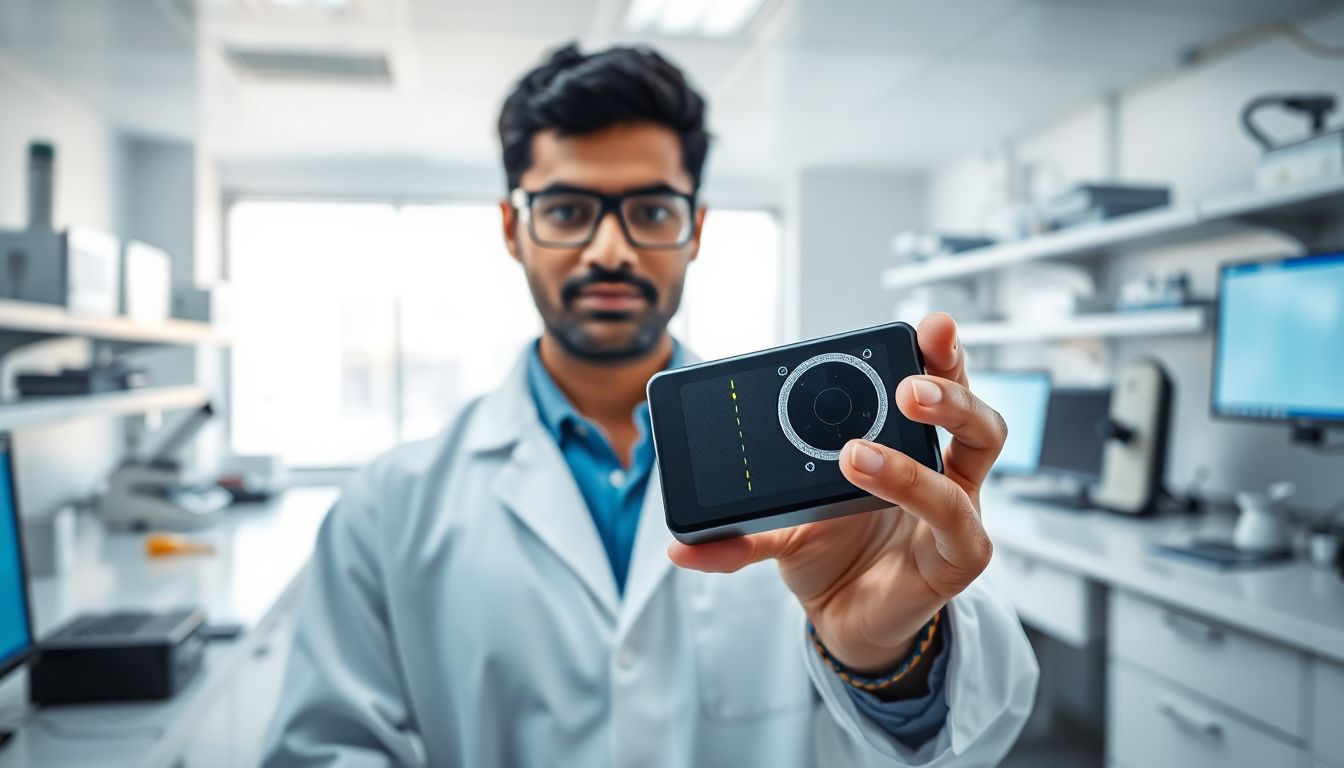
Researchers from BITS Pilani's Hyderabad and Goa campuses, alongside IISER Kolkata and partner institutions, have developed a portable IoT-enabled device designed to detect minute amounts of TKX-50, a high-energy explosive material.
The research team published their findings in the journal Advanced Materials Technologies in a study titled ‘Molecular-To-Device Integration: A Turn-On Polymeric Receptor for IoT-Enabled Detection of Explosive TKX-50’. Scientists from the Defence Materials and Stores Research and Development Establishment in Kanpur and the CSIR-Central Salt and Marine Chemicals Research Institute in Bhavnagar also collaborated on the project.
The device relies on a specially developed polymer sensor that increases its light emission when coming into contact with TKX-50. Under laboratory conditions, the polymer's normally faint glow increases by about 120 times upon exposure to TKX-50. The light shift is also visible under ultraviolet light.
To ensure accuracy, scientists tested the polymer against seven other explosives, including RDX, TNT, HMX, CL-20, FOX-7, TATB, and PETN. None produced the same significant glow response. Tests using common salts and ammonium compounds similarly yielded no comparable light increase. In laboratory testing, the polymer detected TKX-50 concentrations as low as 29.2 nanomolar, while the complete portable device achieved a detection limit of 930 nanomolar.
The prototype features a light detector, an LED, a microcontroller, a small display screen, and a 3D-printed outer casing that reduces ambient light interference. An internal sensor translates the glowing polymer reaction into an electrical reading, which can be transmitted wirelessly to the ThingSpeak IoT platform at 20-second intervals.
“We have translated that recognition event into an electrical signal that can be measured, processed and transmitted using a compact IoT-enabled platform,” said Prof Sanket Goel of BITS Pilani.
The development remains at the proof-of-concept stage. While tests have succeeded with TKX-50 mixed into laboratory solutions, the system has not yet been tested on real-world samples such as luggage, air, soil, or physical surfaces. Researchers stated that further field testing will be required before the device can be used in practical security operations.