Bangkok to Hyderabad Flights Account for 70 Percent of Airport Cannabis Seizures
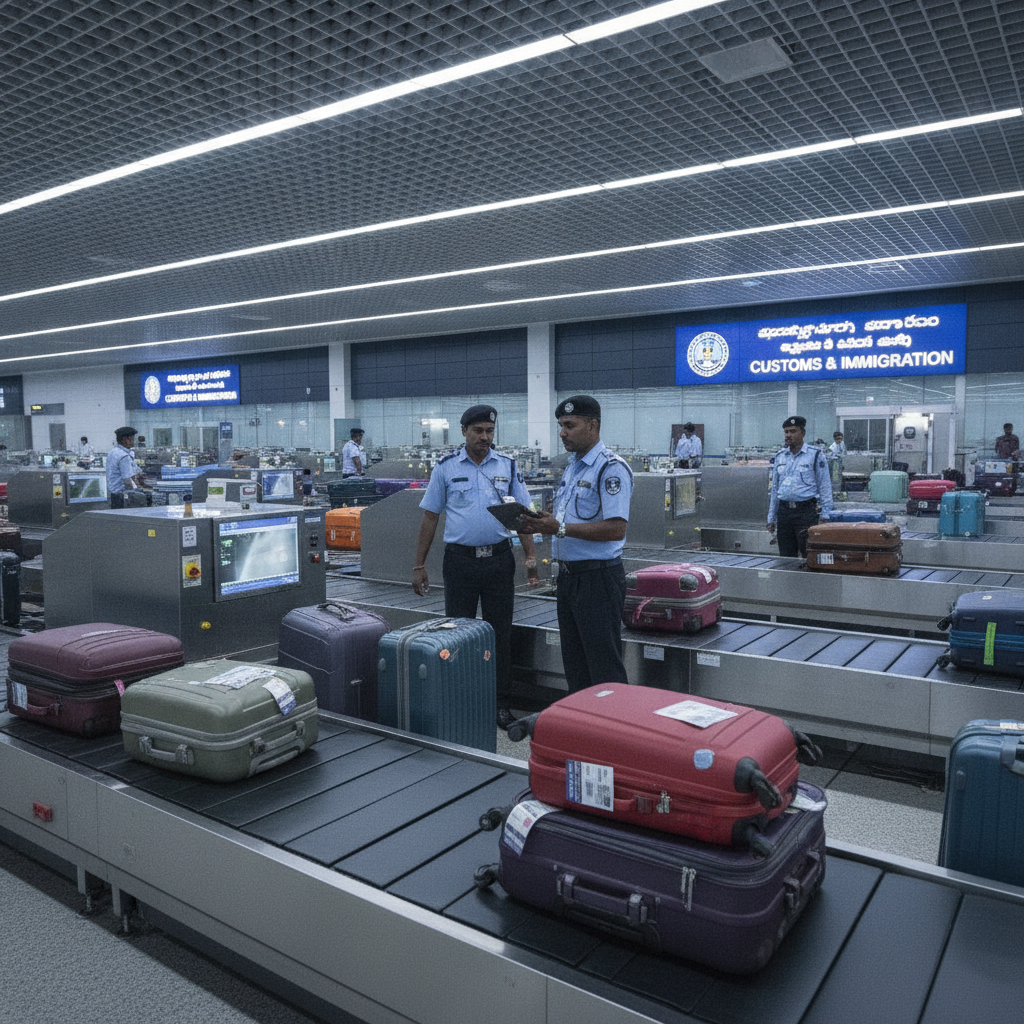
Two specific flight routes from Bangkok to Hyderabad accounted for nearly 70 percent of all hydroponic cannabis seized at the Rajiv Gandhi International Airport (RGIA) in Shamshabad between November 2024 and June 2026. Investigators revealed that a courier-driven drug supply chain repeatedly relied on these two arrival routes to smuggle the contraband.
An analysis of 33 seizure cases during this period showed that these two international flights—one operated by an unnamed Indian carrier and the other by an unnamed Thailand airline—featured in 22 cases. Together, they accounted for approximately 134.2 kilograms of the seized cannabis.
According to investigators, traffickers preferred these flights due to their convenient direct connectivity, frequency, and arrival timings. The Indian carrier-operated flight was linked to more individual cases, appearing in 12 seizures that yielded 56.4 kilograms. However, the Thai airline carried larger consignments, with 10 linked cases resulting in the seizure of 77.8 kilograms, averaging 7.8 kilograms per case.
Several specific seizures highlight the scale of the operation. On January 24, 2025, authorities seized 8.4 kilograms of cannabis linked to passengers Puthiyottil Ashraf Shoukkathali, Mahat Karki Anuradha, and Mahat Aasha. In another instance, couriers Mubashshir Abbas Sayyed and Shabbar Raza Rizvi were intercepted on the Thai airline carrying 13.9 kilograms of cannabis, valued at Rs 13.9 crore.
Later, on April 7, 2026, customs officers at the airport intercepted Sodha Mohsin Bahadurbhai after his arrival from Bangkok on flight TG-329. Officers recovered 13.2 kilograms of hydroponic ganja packed in 22 vacuum-sealed packets.
Investigations revealed that syndicates recruited couriers, including women, by offering payments ranging from Rs 20,000 to Rs 40,000 per trip, alongside travel, food, and accommodation expenses. The contraband was typically concealed in checked-in baggage using false compartments, vacuum-sealed packets, or food packaging like cookie boxes and cornflakes cartons.
The risk chain of this supply network extended beyond customs checks. Investigators found that accomplices often waited outside the terminal to transport the drugs to other cities, including Mumbai, by road, bus, or domestic flights.