10th-Century Chalukya-Era Inscription Discovered in Hanamkonda's Mulkanoor
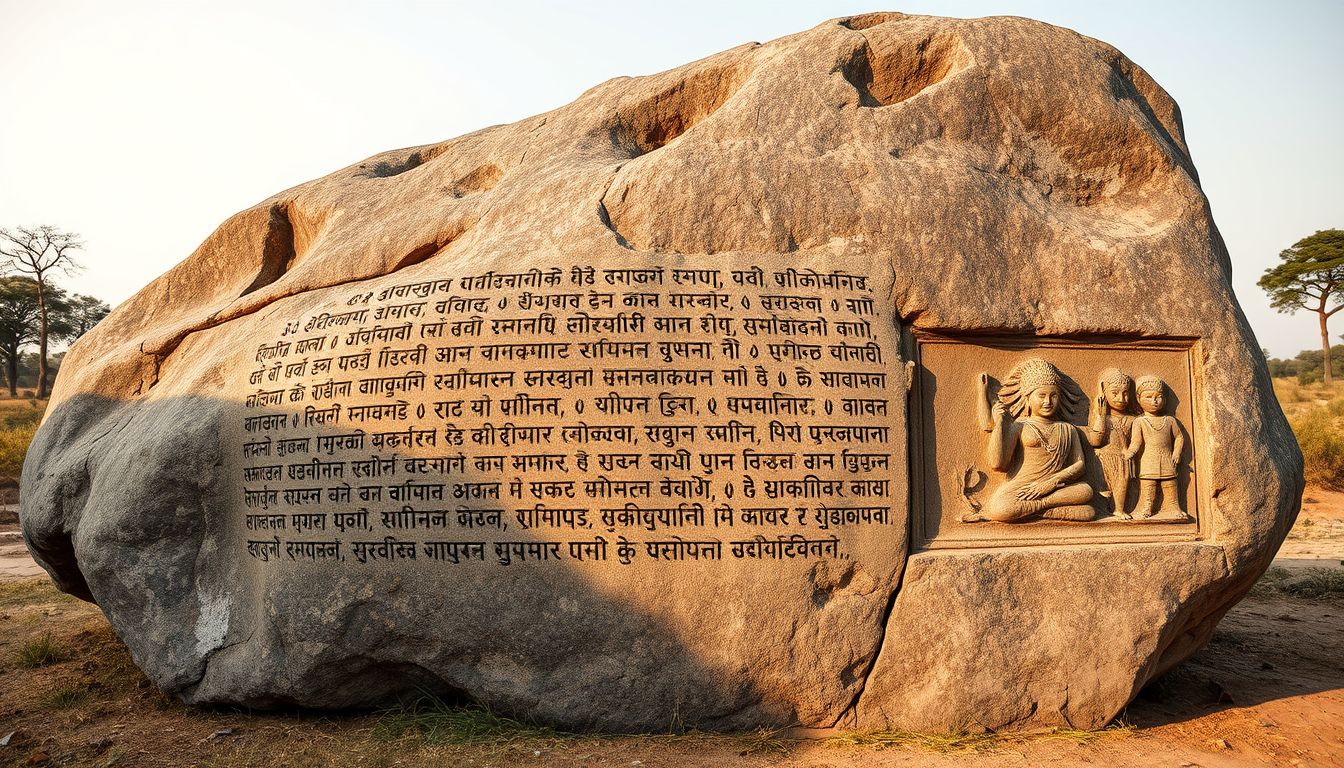
A 10th-century inscription dating to the Kalyani Chalukya period has been discovered at Mulkanoor in Bheemadevarapalli mandal of Hanamkonda district, documenting a historical land donation in the region.
The inscription was identified during field exploration by G. Kishore, a research member of the Kotha Telangana Charitrabrundam. It is carved onto a rock known locally as Katamayya rock, situated behind the Mahila Sahakara Dairy in Mulkanoor.
Along with the inscription, the rock features multiple carvings rendered in the post-Rashtrakuta style. These include sculptures of Ganesha, a Shivalinga resting on a Vedibhadra pedestal, Nandi, and Mahishasuramardini, as well as representations of the Sun and Moon. Votive Naga stones are located opposite the rock.
According to Sriramoju Haragopal, president of the Kotha Telangana Charitrabrundam, the inscription is written in the Telugu-Kannada script and Kannada language. Because several portions of the rock surface have worn away and suffered damage over time, researchers have only been able to decipher part of the text.
The readable portion indicates that during the rule of the Kalyani Chalukyas, a Mahasamanta who held the title "Samadhigata Pancha Mahashabda" made a land donation at Mulkaluru. The donor's name is possibly Bijjana. The record mentions the grant of wet land or land with water, referred to as "neer nelanu," on the 12th day of the bright fortnight in the month of Chaitra, though the specific year cannot be established from the damaged section.
The text begins with the customary "Swasti" and references the Mahasamanta and his lineage before detailing the grant. It also includes an invocation for the continued prosperity of the kingdom and ends with a traditional plea urging rulers to safeguard the charitable gift.
Haragopal noted that the damaged state of the rock has constrained the amount of information that can be confirmed immediately, adding that further examination of the surviving characters could help clarify the donor's identity, the exact date, and other aspects of the grant.